Bowers 1986, Lawrence 2003: The Same Question, Two Answers
Seventeen years separated a five-to-four loss from a six-to-three reversal — the same constitutional question, differently framed and differently answered.
Side-by-side holdings
- Bowers v. Hardwick (1986)Vote: 5–4 — Clause: Due Process — Holding: Georgia sodomy statute upheld; no fundamental right to homosexual sodomy found
- Lawrence v. Texas (2003)Vote: 6–3 — Clause: Due Process (majority); Equal Protection (O'Connor concurrence) — Holding: Texas Homosexual Conduct Law struck; Bowers explicitly overruled
Bowers 1986, Lawrence 2003: The Same Question, Two Answers
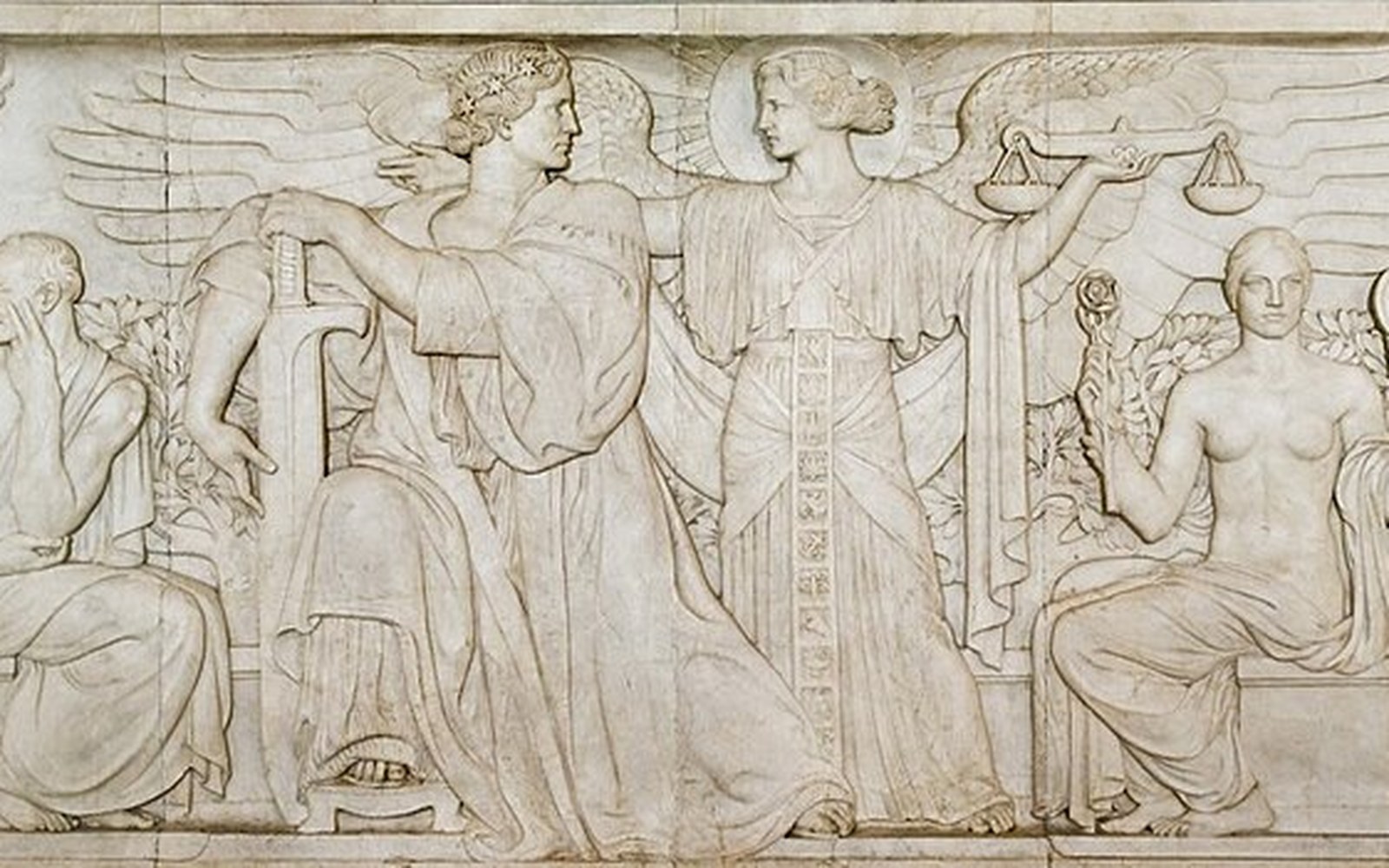
Photo: Supreme Court of the United States West Frieze · Wikimedia CommonsWhat Bowers Held, and How It Asked the Question
In Bowers v. Hardwick, 478 U.S. 186 (1986), the Supreme Court upheld Georgia's criminal sodomy statute against a due-process challenge brought by Michael Hardwick, who had been arrested under it in his own bedroom. The majority, written by Justice Byron White, framed the constitutional question narrowly: whether the Constitution confers a fundamental right upon homosexuals to engage in sodomy. Stated that way, the question carried its answer. The majority found no such right deeply rooted in the nation's history and traditions, applied rational basis review, and held that Georgia's statute survived it. Chief Justice Warren Burger concurred to underscore that condemnation of sodomy stretched back to Roman law and Judeo-Christian moral teaching. Justice Lewis Powell, who cast the deciding fifth vote, later remarked that he may have voted incorrectly.
Justice Harry Blackmun's dissent, joined by three colleagues, argued that the majority had mischaracterised the question entirely. The case was not about a right to sodomy; it was about the right of individuals to be left alone in the intimacy of their homes. That reframing would prove durable.
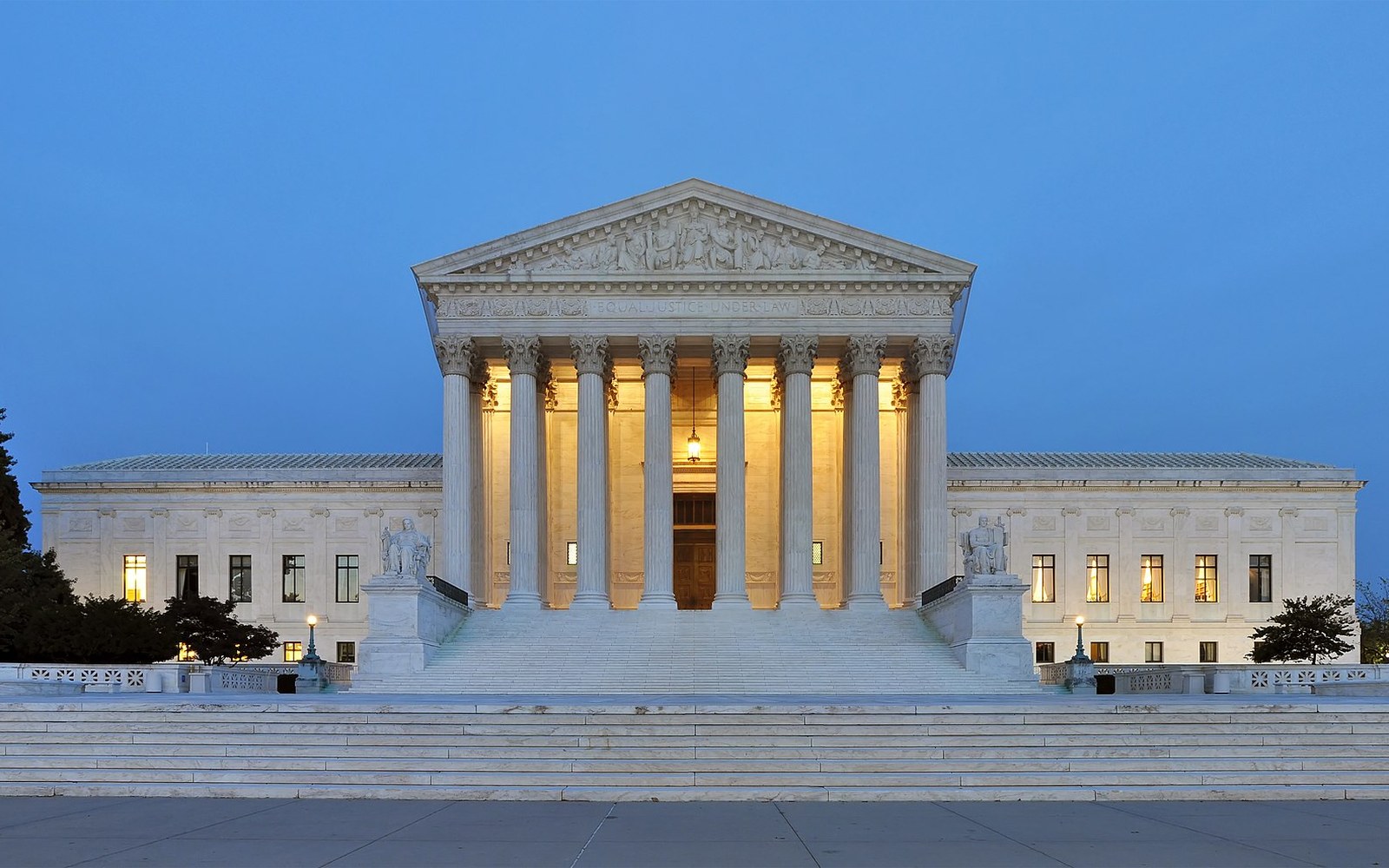
Nine votes, and the building they are counted in.
Photo: Panorama of United States Supreme Court Building at Dusk · Wikimedia CommonsWhat Lawrence Held, and How Kennedy Wrote It
Lawrence v. Texas, 539 U.S. 558 (2003), arose when Houston police, responding to a false weapons report, entered John Lawrence's apartment and found him and Tyron Garner engaging in consensual sex. Both were charged under Texas's Homosexual Conduct Law, which — unlike Georgia's statute — applied only to same-sex partners. The Court granted certiorari on the due-process question and, in an opinion by Justice Anthony Kennedy, overruled Bowers directly ↗.
Kennedy's majority held that Bowers had been wrong when decided and remained wrong. The error lay in its framing: the liberty interest at stake was not a discrete act but the right of consenting adults to define their own relationships and their own dignity within the protected space of private conduct. The Court located this liberty in the Due Process Clause of the Fourteenth Amendment, declining to declare the class of people affected a suspect class or to apply heightened scrutiny, but finding that Texas's law served no legitimate state interest sufficient to justify the intrusion. The vote was six to three; Justices John Paul Stevens, David Souter, Ruth Bader Ginsburg, and Stephen Breyer joined Kennedy, and Justice O'Connor concurred in the judgment.
Justice Antonin Scalia's dissent, joined by Chief Justice William Rehnquist and Justice Clarence Thomas, accused the majority of signing on to the so-called homosexual agenda and warned that the decision's logic could not be contained — that prohibitions on same-sex marriage, among other things, would be difficult to sustain. That warning reads, in retrospect, as a prediction.
O'Connor's Separate Path
Justice O'Connor did not join Kennedy's opinion. She concurred in the judgment on equal-protection grounds, a narrower route that avoided overruling Bowers while still striking the Texas statute. Because Texas criminalised the same conduct only when committed by same-sex partners, the law drew a classification by identity without a rational basis to support it. O'Connor's concurrence drew on Romer v. Evans, 517 U.S. 620 (1996), which had applied rational basis review to strike a Colorado constitutional amendment ↗ that singled out gay men, lesbians, and bisexuals for exclusion from anti-discrimination protection. For O'Connor, equal protection was sufficient to decide the case; the majority's due-process holding, and its explicit burial of Bowers, went further than she wished to travel.
The two cases together mark the constitutional distance between framing a question as a request for a named right and framing it as a claim of liberty and dignity. The Court's answer changed when the question did.

Almost every case here reached the Court through one of a handful of litigating offices.
Photo: Erik Mclean / Pexels