
White Knot

Signed Into Law

One bill got sixty-one votes. One never got a vote at all.

A constitutional right was written into statute seven years after a court had already found it, because nobody in the Capitol assumed the finding would hold.

Respect for Marriage Act · H.R. 8404 · read the record

2022
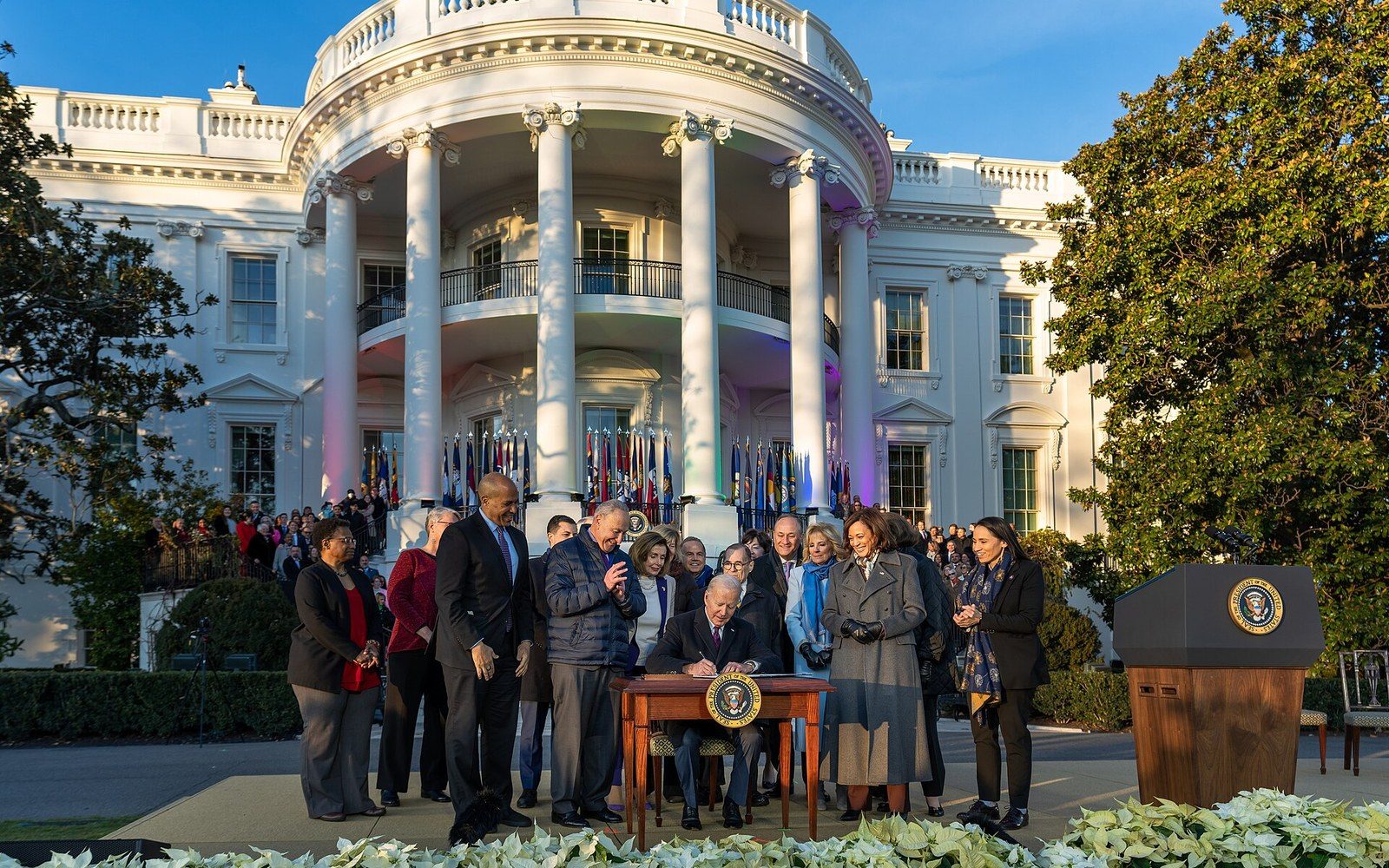
President signing legislation at an outdoor desk on the White House South Lawn as officials look on

From the enacted text

“No person acting under colour of State law may deny full faith and credit to any public act, record, or judicial proceeding of any other State pertaining to a marriage between two individuals, on the basis of the sex, race, ethnicity, or national origin of those individuals.”

Pub. L. 117–228, § 4 · 136 Stat. 2305

Signed Into Law

Six acts of Congress, and the one that stopped at the House.

Six acts of Congress and one piece of agency guidance — bill number, chamber votes, date of signature, and the section of the code each one touched. All seven

2022

H.R. 8404: Recognition Without Licensure

The Respect for Marriage Act, signed 13 December 2022, repealed the Defense of Marriage Act and required federal and interstate recognition of any marriage valid where performed — but imposed no obligation on any state to issue a licence.

H.R. 8404 · Pub. L. 117–228 · Senate 61–36 · House 258–169
President signing legislation at an outdoor desk on the White House South Lawn as officials look on
1996

DOMA: What Sections 2 and 3 Actually Said

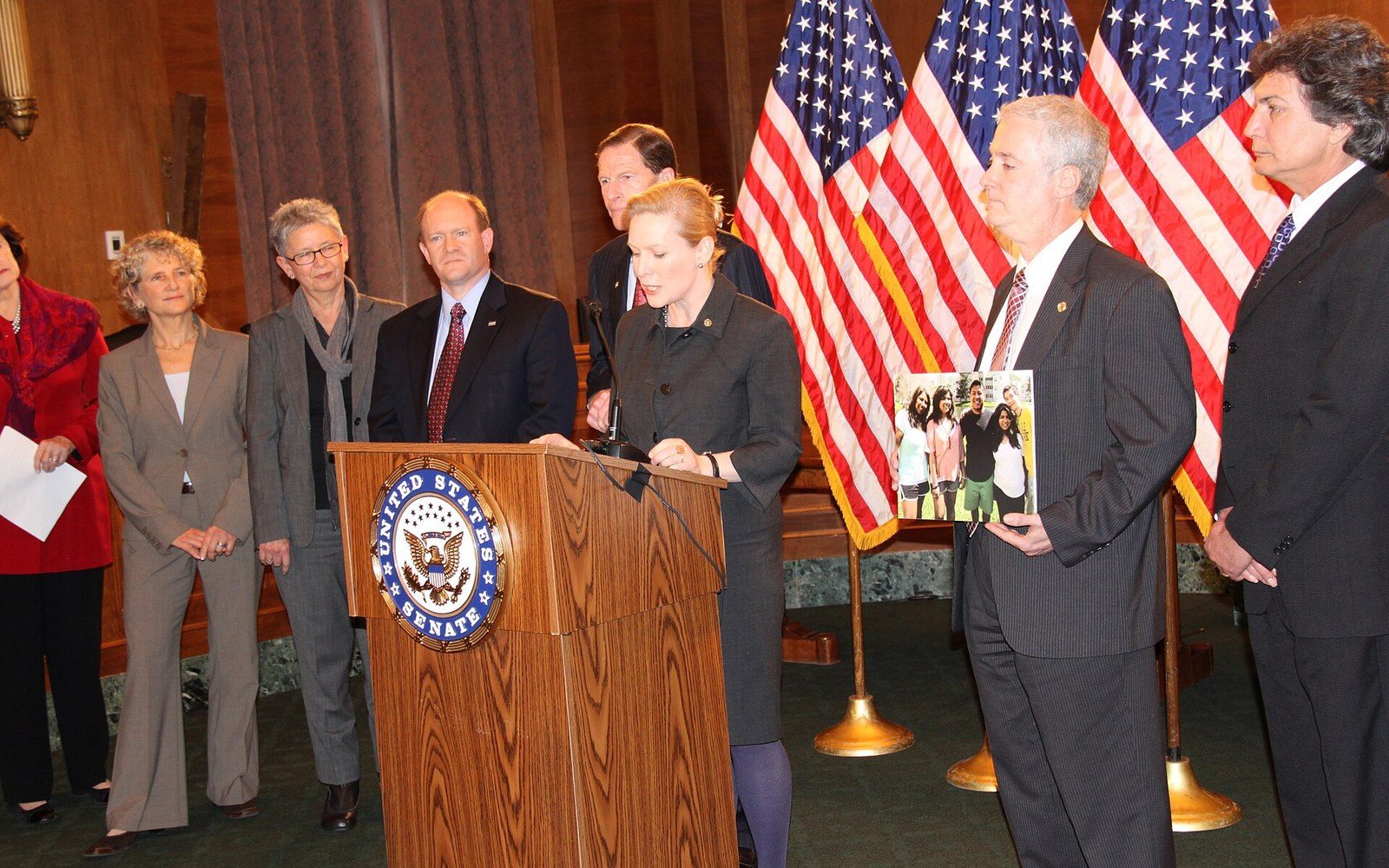
The Defense of Marriage Act, signed 21 September 1996, had two operative sections: section 3 barred federal recognition and was struck in Windsor (2013); section 2 permitted states to withhold recognition from out-of-state marriages and was never formally struck, remaining on the books until the Respect for Marriage Act repealed it outright in 2022.

Pub. L. 104–199 · 110 Stat. 2419 · repealed in 2022
A woman speaks at a United States Senate podium as officials stand behind her with American flags
2009

The Matthew Shepard and James Byrd Jr. Act, Four Years After the House First Passed It

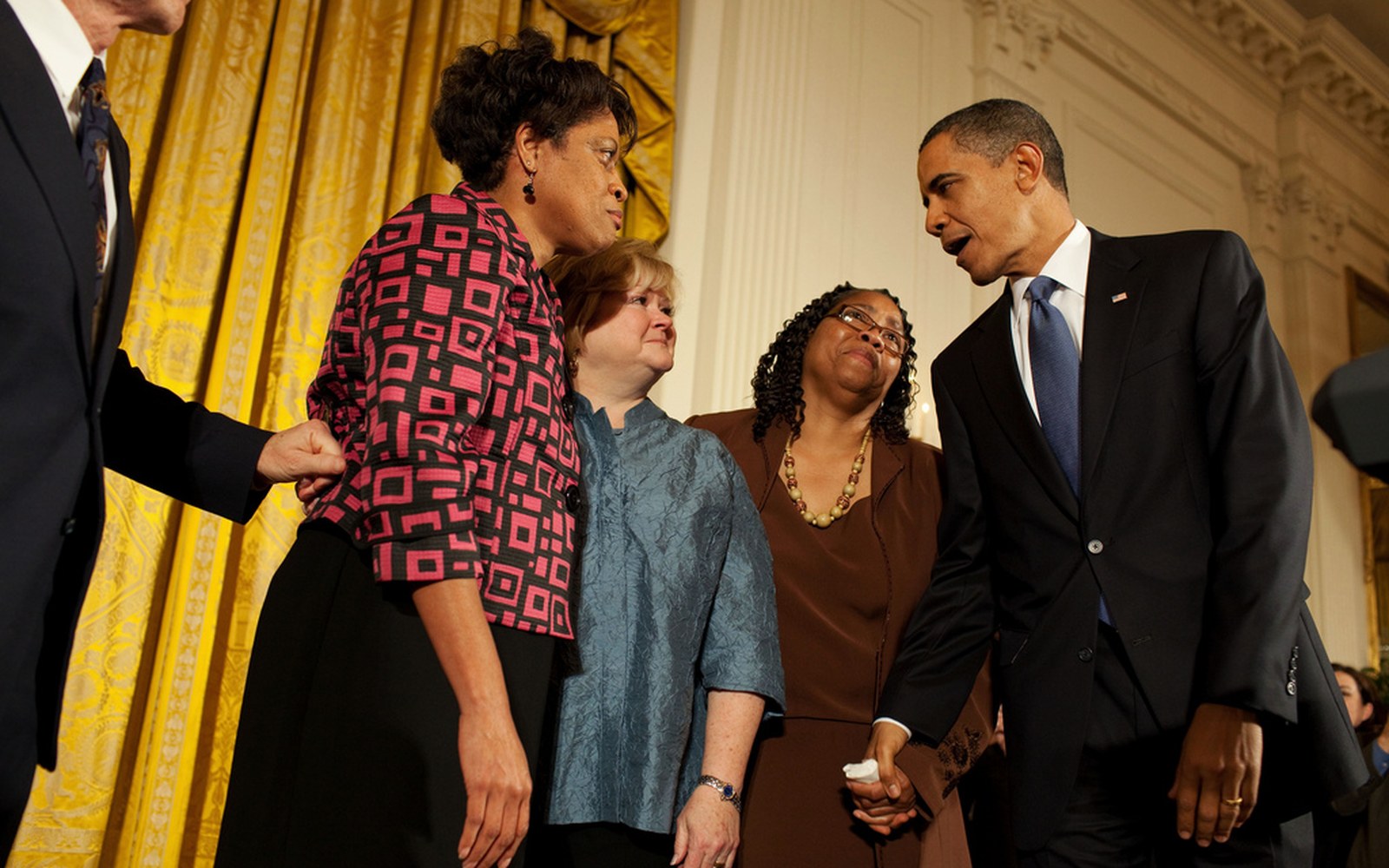
The Matthew Shepard and James Byrd Jr. Hate Crimes Prevention Act was signed 28 October 2009, extending federal hate-crime coverage to sexual orientation, gender identity and disability — provisions that had failed to advance in Congress since 2005.

Pub. L. 111–84, div. E · 18 U.S.C. § 249
President Obama speaks closely with a group of women in an ornate gold-curtained room
2011

Don't Ask, Don't Tell: The 1993 Statute and the 2010 Repeal Vote

The original Don't Ask, Don't Tell policy was enacted as section 654 of Title 10 in 1993; the Don't Ask, Don't Tell Repeal Act of 2010 was signed 22 December 2010 and took effect 20 September 2011 after certification by the Secretary of Defense.

Pub. L. 111–321 · 10 U.S.C. § 654 (repealed)
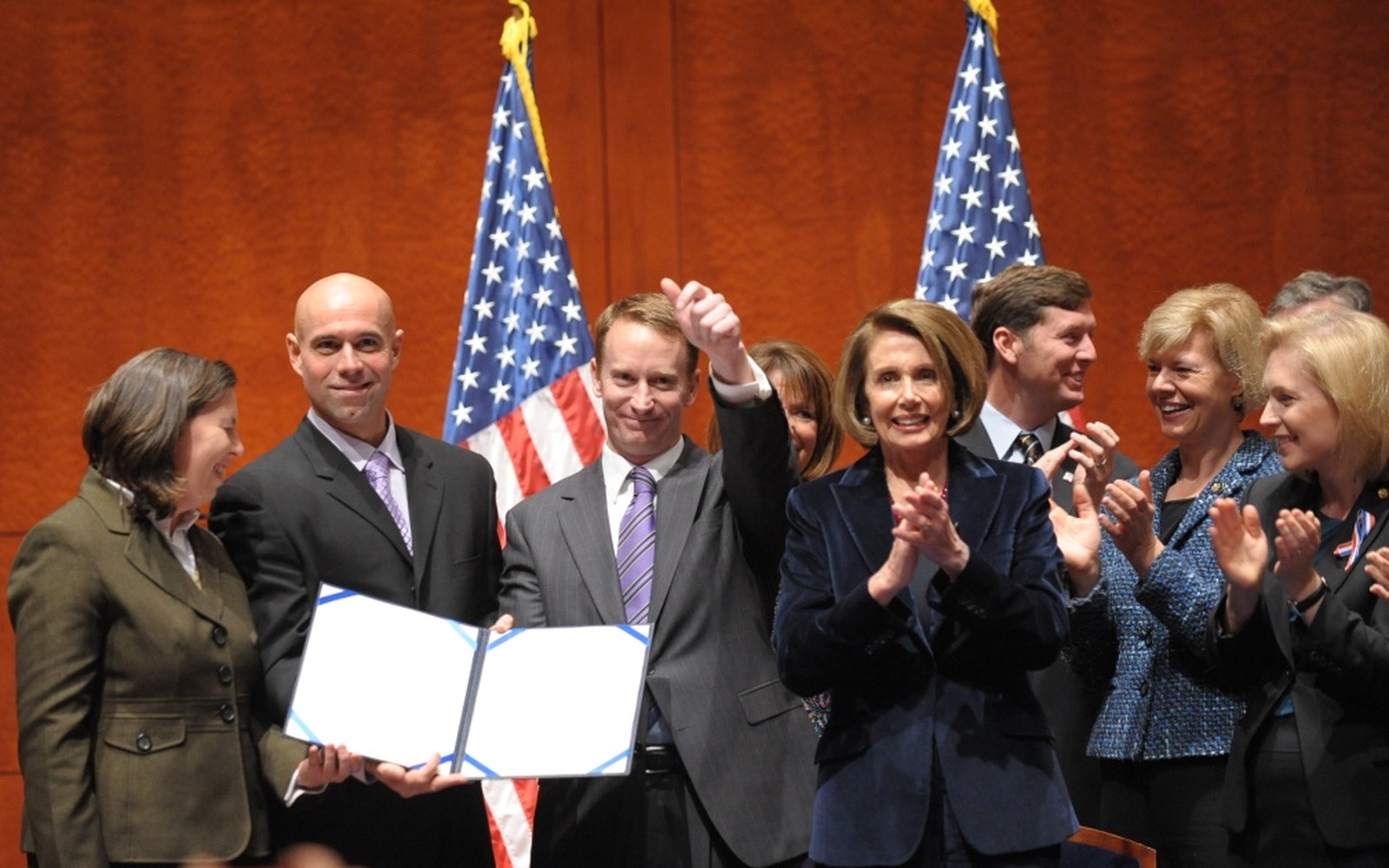
Lawmakers applaud beside a signed document, with American flags in the background
2021

H.R. 5 Passed the House 224–206. The Senate Never Voted.

The Equality Act, which would have amended the Civil Rights Act of 1964 to name sexual orientation and gender identity as protected characteristics across public accommodation, housing, education, credit and jury service, passed the House on 25 February 2021 and received no Senate floor vote.

H.R. 5, 117th Congress · House 224–206 · no Senate floor vote
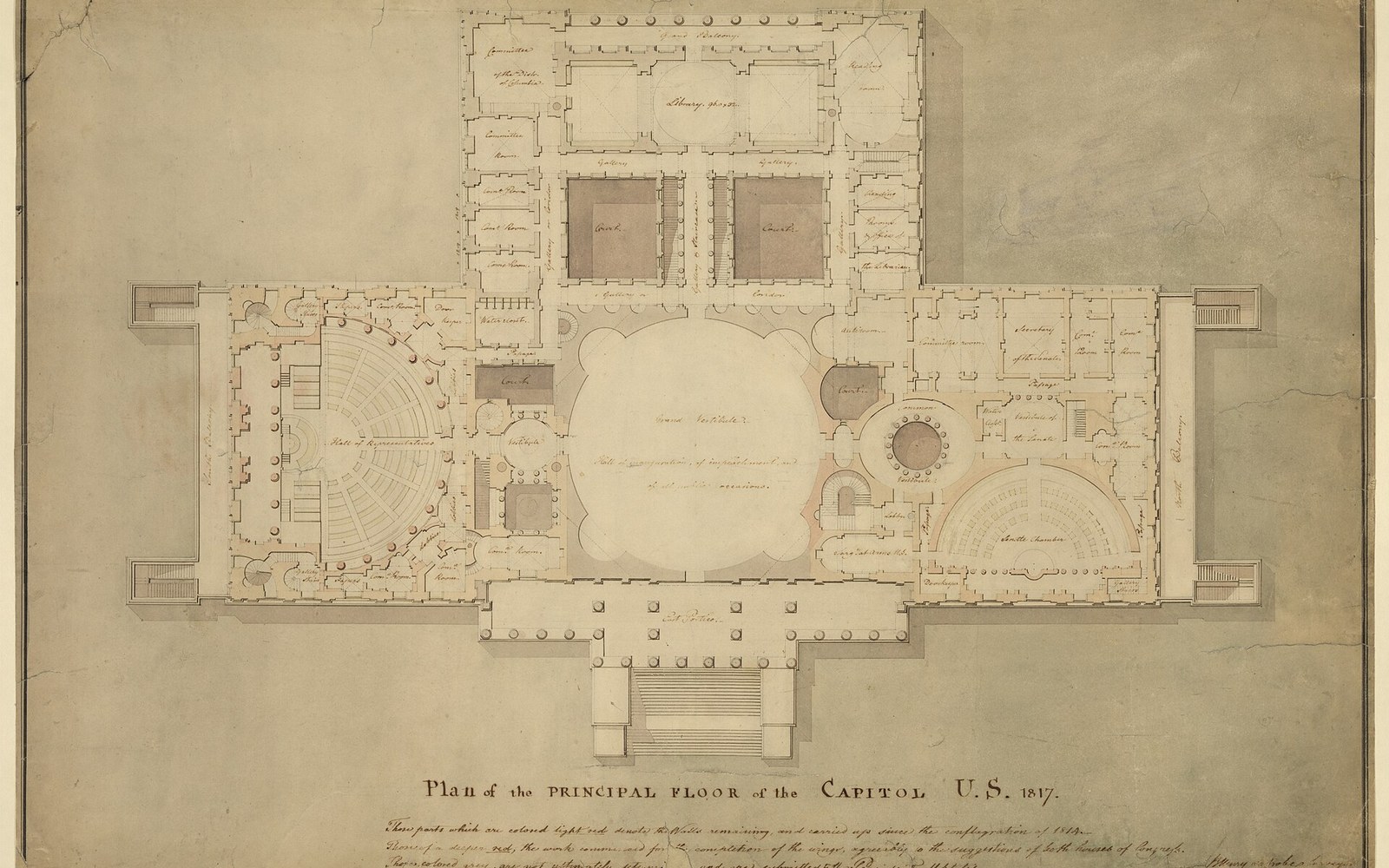
Architectural floor plan of the U.S. Capitol's principal floor, dated 1817

Everywhere Else

Thirty-eight countries said yes. Seventy-one still call it a crime.

Netherlands 2001 first; Thailand's Marriage Equality Act took effect 22 January 2025. Criminalisation count per ILGA World's State-Sponsored Homophobia report. The section

A physical map showing African countries and neighboring Middle Eastern nations with national borders labeled

The count is kept by jurisdiction, not by continent: seventy-one separate statutes, each with its own penalty range and date.

Photo: Nothing Ahead / Pexels
In effectJurisdictionBasis
2001NetherlandsFirst in the world; passed by the States-General in December 2000
2015Ireland62.1 per cent yes on a turnout of 60.5 per cent — the first by popular vote
2018Inter-American CourtAdvisory Opinion OC-24/17, cited in Colombia, Costa Rica and Chile
2019TaiwanReferendums against; Interpretation No. 748 and a statute for it — first in Asia
2025ThailandFirst in Southeast Asia to enact marriage equality by statute
2024Seventy-one jurisdictionsStill criminalise consensual conduct between adults, per ILGA World

Nine Votes

Bowers 1986 to Skrmetti 2025, with the page numbers.

The Supreme Court arc from Bowers v. Hardwick in 1986 to United States v. Skrmetti in 2025 — case name, page citation, vote count, and what the holding actually said. All eight

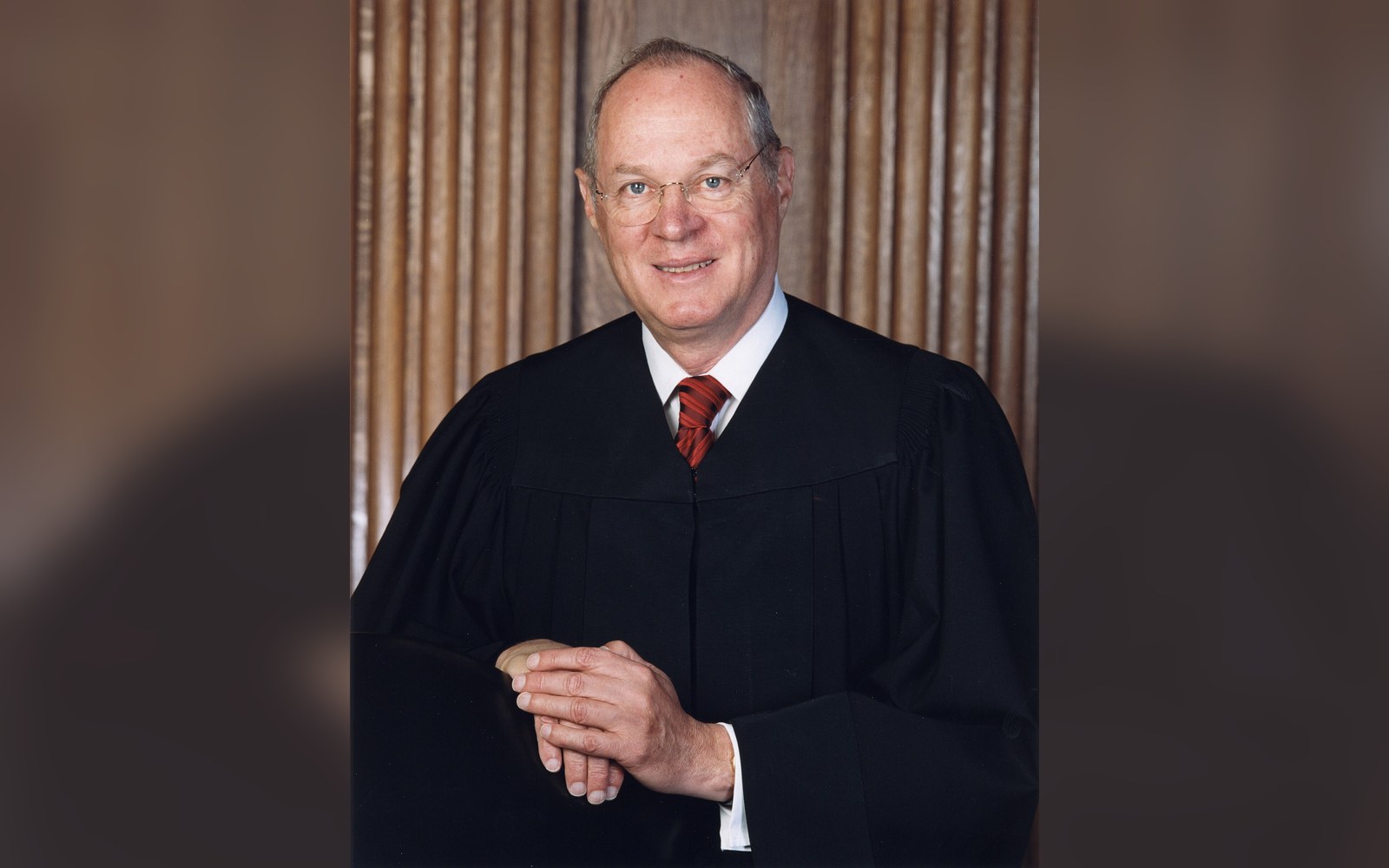
A judge in black robes and red tie poses for an official portrait in front of curtains

Nine Votes

The Supreme Court held on 26 June 2015 by five votes to four that the Fourteenth Amendment requires states to license and recognise same-sex marriages — the majority written by Justice Kennedy, four dissents filed separately by Chief Justice Roberts and Justices Scalia, Thomas and Alito.
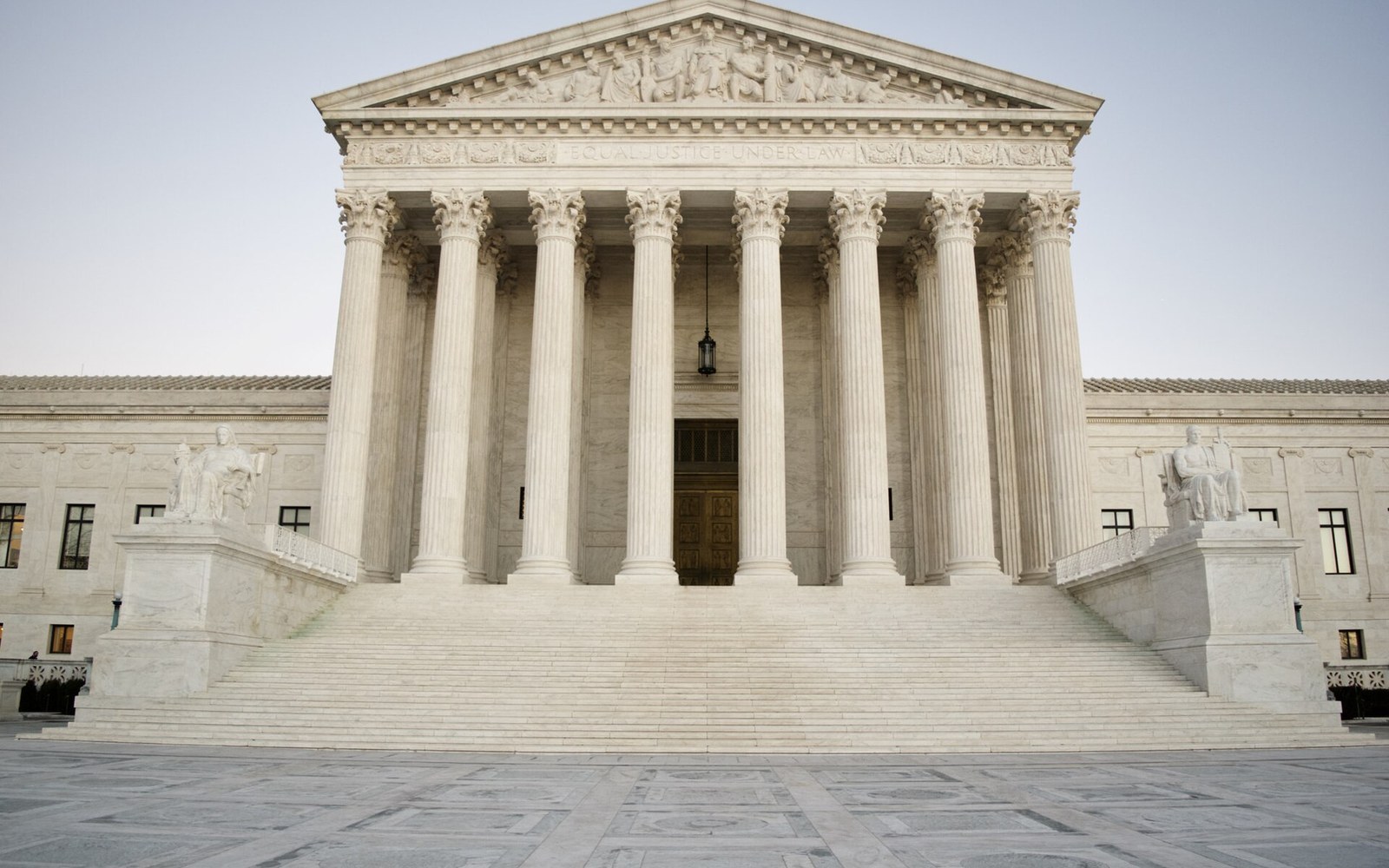
576 U.S. 644 (2015) · five to four

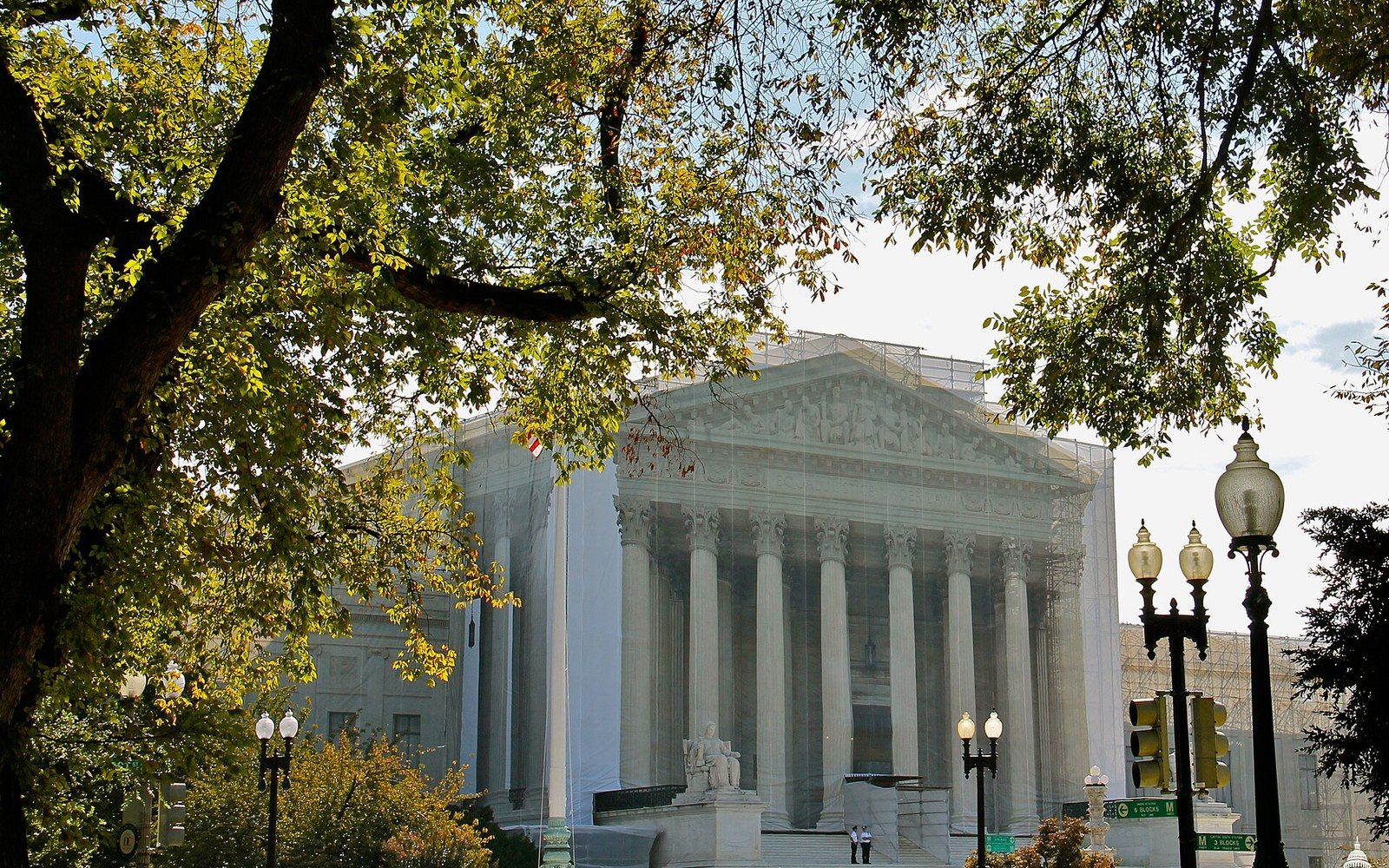
The Supreme Court building's columned facade seen through tree branches and streetlamps

Nine Votes

The Court held five to four in Windsor that DOMA's section 3 — denying federal recognition to lawful same-sex marriages — violated the Fifth Amendment's due process and equal protection guarantees; Edith Windsor's estate-tax claim of $363,053 was the vehicle.

570 U.S. 744 (2013) · five to four

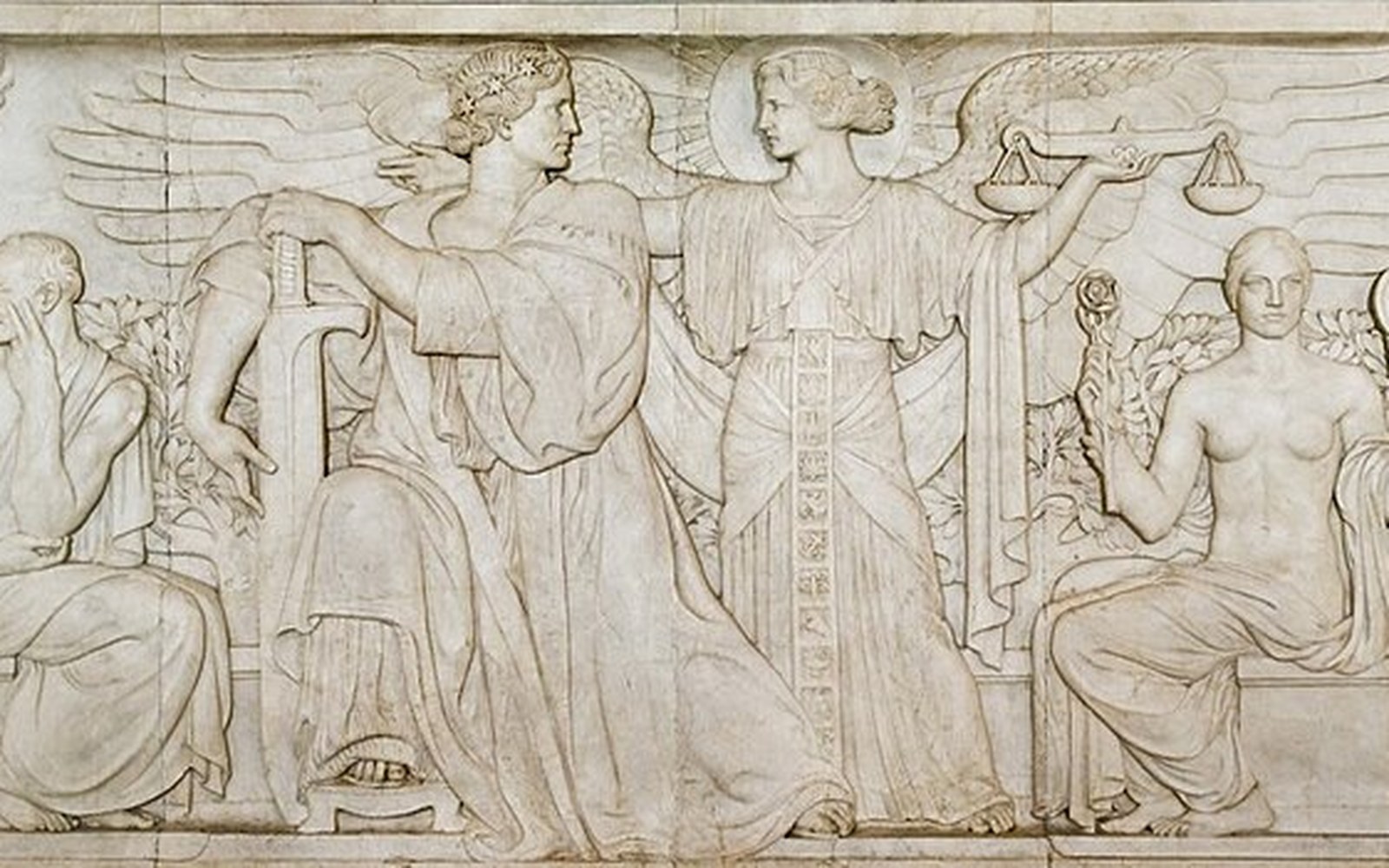
Marble frieze depicting robed allegorical figures, one holding a sword and another a scale

Nine Votes

Bowers v. Hardwick, 478 U.S. 186 (1986), upheld Georgia's sodomy statute five to four; Lawrence v. Texas, 539 U.S. 558 (2003), overruled it six to three, with Justice Kennedy again writing the majority.

478 U.S. 186 (1986) · 539 U.S. 558 (2003)