Taiwan 2019: The Referendum Said No. The Legislature Said Yes.
The statutory record
- Judicial Yuan Interpretation No. 74824 May 2017; held the Civil Code's opposite-sex marriage limitation unconstitutional; gave the legislature a two-year remedial deadline
- Act for Implementation of J.Y. Interpretation No. 748 — passed 17 May 2019, promulgated same day, in force 24 May 2019
- 2023 adoption amendmentpassed 16 May 2023; extended full joint adoption rights to same-sex married couples
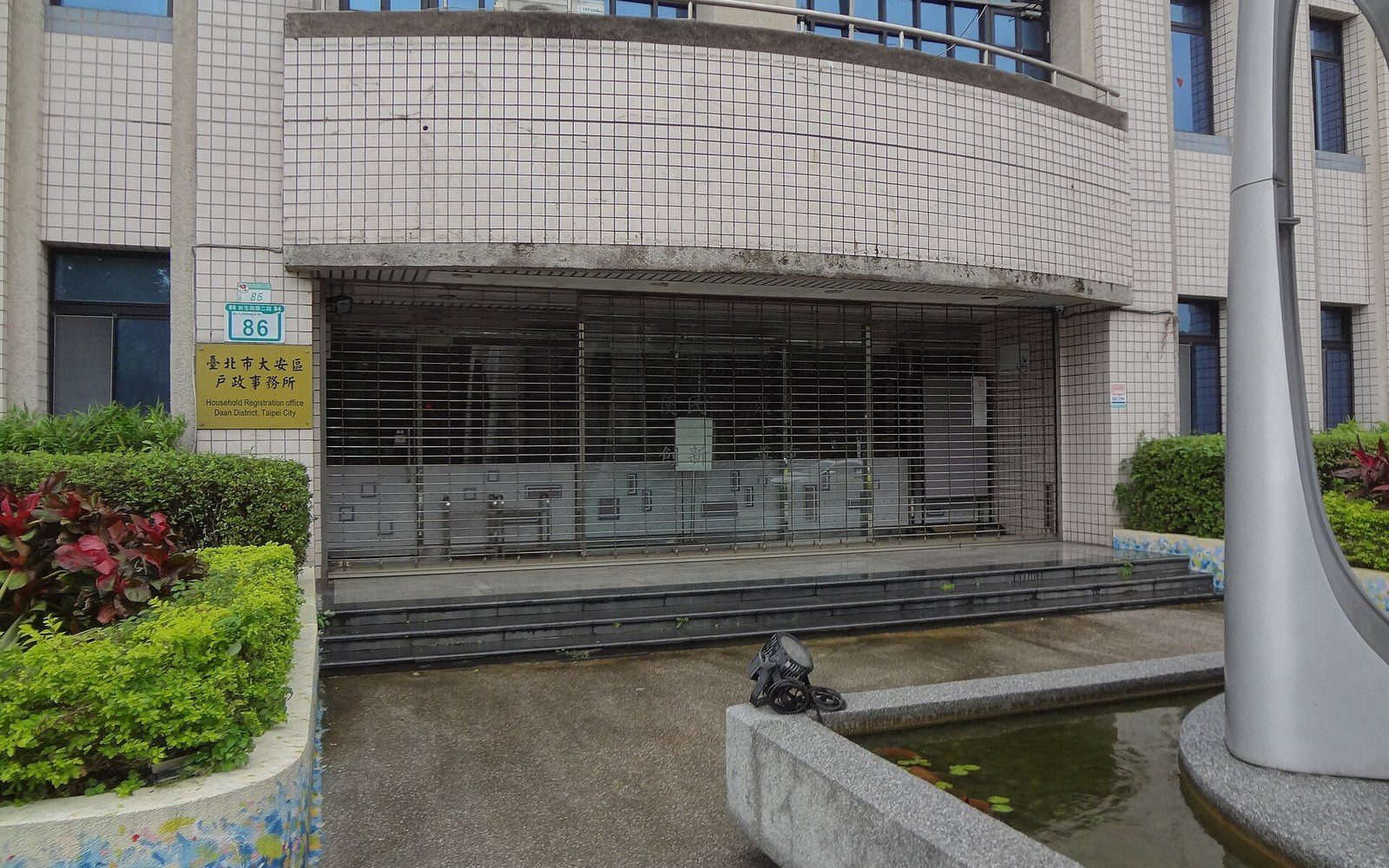
Taiwan 2019: The Referendum Said No. The Legislature Said Yes.
Photo: Household Registration Office, Daan District, Taipei City 20181209 · Wikimedia CommonsThe constitutional interpretation that preceded both
Three referendums held in November 2018 returned unmistakable results. Taiwanese voters approved, by margins of roughly sixty percent, proposals that defined marriage in the Civil Code as between a man and a woman, that confined same-sex unions to a framework separate from the Civil Code's marriage chapter, and that barred same-sex partnership content from the compulsory education curriculum. The popular verdict appeared decisive. The legislature then passed marriage equality into law six months later.
The explanation for that sequence lies in a decision the Constitutional Court had already issued. On 24 May 2017, the Judicial Yuan Grand Justices handed down Interpretation No. 748 ↗, finding that the provisions of the Civil Code limiting marriage to opposite-sex couples violated both the constitutional guarantee of equal rights and the constitutional protection of the freedom of marriage. The Grand Justices gave the Legislative Yuan two years to amend the Civil Code or enact separate legislation conforming to the interpretation. That deadline was fixed at 24 May 2019. Constitutional interpretation in Taiwan operates as supreme law; a referendum result, however large, cannot override it. The 2018 popular votes determined the legislative form the remedy would take — a standalone statute rather than a direct Civil Code amendment — but they could not cancel the constitutional obligation itself.

The bound volumes are the citation: a holding exists at a page number, and that page number is how every later court reaches it.
Photo: Christian Wasserfallen / PexelsWhat the statute said and what it did
The Legislative Yuan passed the Act for Implementation of J.Y. Interpretation No. 748 ↗ on 17 May 2019, seven days before the Grand Justices' deadline expired. President Tsai Ing-wen promulgated it the same day. The act entered into force on 24 May 2019.
The act's operative structure is precise and deliberate. Article 2 provides that two persons of the same sex may form an exclusive and permanent union by registering a marriage (婚姻登記, hūnyīn dēngjì — marriage registration) with the competent authority. Article 4 sets the minimum age at eighteen. Articles 6 through 8 import the Civil Code's provisions on the formation of marriage by mutual consent, requiring two witnesses and registration before the household registration authority. The act does not amend the Civil Code's marriage chapter; it creates a parallel statutory instrument that achieves the same legal effect for same-sex couples. Subsequent articles address property regimes, inheritance, adoption, and dissolution, each cross-referencing the corresponding Civil Code provisions and applying them with specified modifications.
The practical consequence was immediate. Household registration offices opened on the morning of 24 May 2019, and same-sex couples across Taiwan registered marriages that day, making Taiwan the first jurisdiction in Asia to permit same-sex marriage under domestic law. Approximately five hundred couples registered on the first day alone.
The international position it created
Taiwan's domestic legal status is constitutionally distinct from that of a recognised state, and the act's drafters addressed this directly. Article 5 provides that where one party to the intended marriage holds foreign nationality, registration is available if the law of that party's home jurisdiction permits same-sex marriage. The provision excluded many couples with mainland Chinese or Hong Kong partners, whose jurisdictions do not recognise such unions, and generated subsequent litigation and legislative debate. The restriction illustrated the degree to which Taiwan's marriage equality regime, however complete in domestic terms, remained conditioned by the island's ambiguous international standing.
The 2019 act did not resolve every question the 2017 interpretation had raised. Joint adoption by same-sex married couples remained restricted to the biological or adopted child of one spouse; full joint adoption from outside the family was not extended until further legislative action in 2023. That amendment, passed 16 May 2023, completed the statutory framework the Grand Justices had originally required.
Taken as a whole, the Taiwan sequence — constitutional holding in 2017, adverse referendum in 2018, legislative compliance in 2019 — demonstrates the relationship between constitutional review and popular sovereignty in a jurisdiction where the former sets the floor and the latter shapes, but cannot eliminate, the remedy.

Christopher Street, part of a National Monument since 24 June 2016.
Photo: Stonewall Inn with Orlando nightclub shooting memorial during Pride 2016 (50126p) · Wikimedia Commons