The Matthew Shepard and James Byrd Jr. Act, Four Years After the House First Passed It
Federal hate-crime law extended to sexual orientation, gender identity and disability on 28 October 2009, after four years of failed attempts to move earlier versions through Congress.
Key statutory details
- StatuteMatthew Shepard and James Byrd Jr. Hate Crimes Prevention Act, enacted as Division E of the National Defense Authorization Act for Fiscal Year 2010 (Pub. L. 111-84)
- Primary new provision18 U.S.C. § 249
- Senate vote68–29, 22 October 2009
- House vote on conference report281–146, 8 October 2009
- Signed28 October 2009
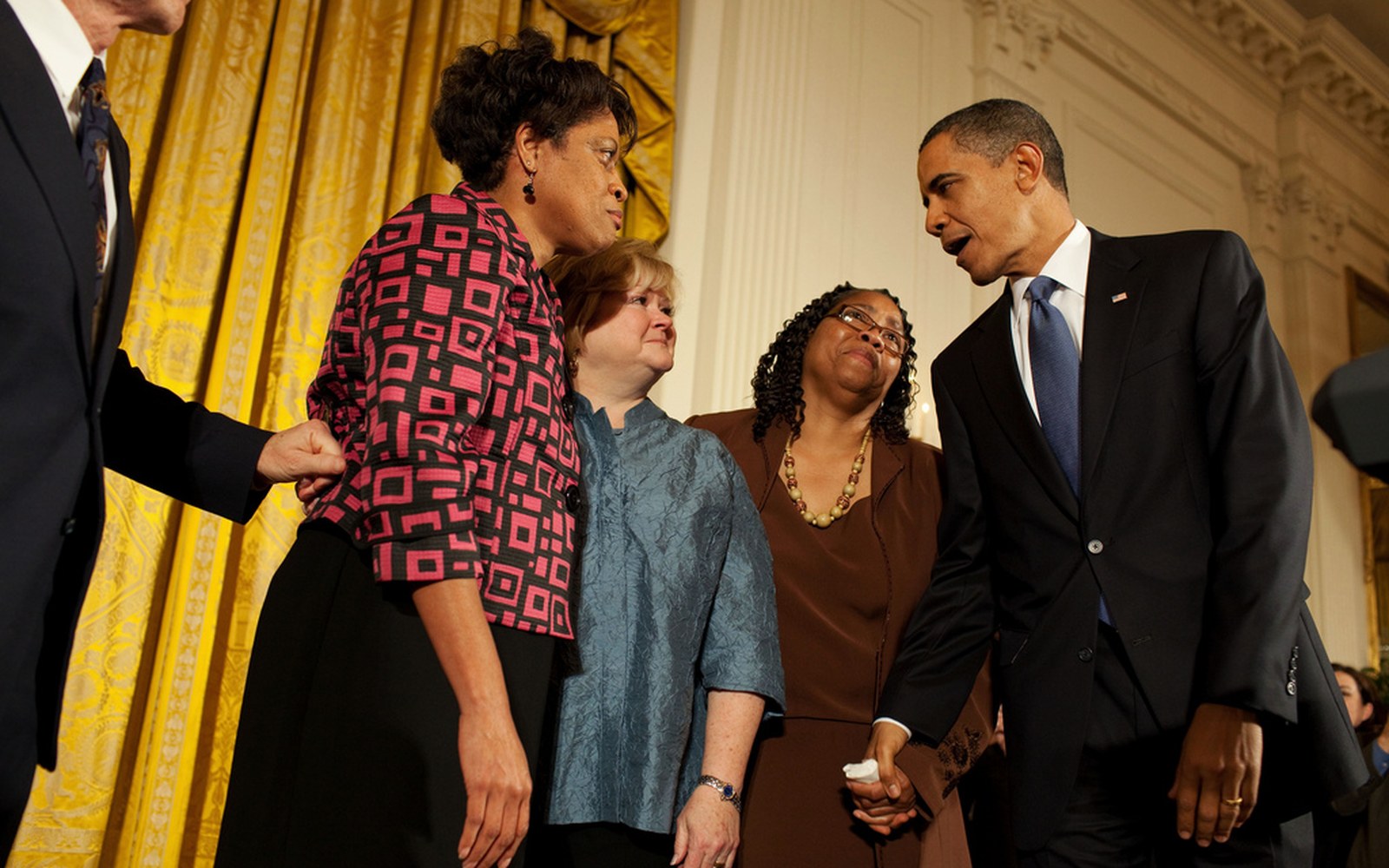
The Matthew Shepard and James Byrd Jr. Act, Four Years After the House First Passed It
Photo: Matthew Shepard and James Byrd, Jr. Hate Crimes Prevention Act · Wikimedia CommonsA Bill Stalled Since 2005
The Local Law Enforcement Hate Crimes Prevention Act — the bill's working title through its long legislative life — first passed the House in 2005, then again in 2007, neither time advancing to a Senate floor vote in time to reach a president's desk. The Bush administration had signaled opposition. By 2009, sponsors had a new calculus: a Democratic-controlled House and Senate, and a president who had campaigned on extending federal hate-crime protections to gay, lesbian, bisexual and transgender people.
The renamed bill, the Matthew Shepard and James Byrd Jr. Hate Crimes Prevention Act, honoured two men murdered in 1998: Matthew Shepard, a gay student killed in Laramie, Wyoming, and James Byrd Jr., a Black man killed near Jasper, Texas, in a racially motivated attack. Both killings had intensified congressional pressure to revisit the scope of the federal hate-crime statute enacted in 1968 ↗, which covered crimes motivated by race, color, religion and national origin but only when the victim was engaged in a federally protected activity — a narrow and increasingly criticised trigger.

The bound volumes are the citation: a holding exists at a page number, and that page number is how every later court reaches it.
Photo: Christian Wasserfallen / PexelsPassage and the Defense Authorization Vehicle
The act's final route to enactment was through the National Defense Authorization Act for Fiscal Year 2010, H.R. 2647. Attaching the hate-crime bill to must-pass defense legislation broke the Senate impasse that had stalled standalone versions. The Senate adopted the combined measure on 22 October 2009 by a vote of 68 to 29. The House had passed H.R. 2647 earlier in the session; the conference report cleared the House on 8 October 2009 by 281 to 146. President Barack Obama signed the law on 28 October 2009.
The statutory text added a new section, 18 U.S.C. § 249 ↗, to Title 18 of the United States Code. Section 249 created two distinct federal offences. The first, § 249(a)(1), covered crimes motivated by race, color, religion or national origin, without any requirement that the victim be engaged in a federally protected activity — correcting the 1968 statute's limiting trigger. The second, § 249(a)(2), covered crimes motivated by the actual or perceived religion, national origin, gender, sexual orientation, gender identity or disability of any person, conditioned on a specified federal jurisdictional hook: the crime must have occurred during or in connection with interstate or foreign commerce, or the offender must have used a channel or instrumentality of interstate commerce, or the offence must have crossed a state line.
The jurisdictional condition in § 249(a)(2) reflected the constitutional caution of the bill's drafters. Congress grounded that subsection in the Commerce Clause, given the Supreme Court's holding in United States v. Morrison, 529 U.S. 598 (2000), which had invalidated a civil-remedy provision of the Violence Against Women Act on the ground that gender-motivated violence was not itself commerce. To reduce the risk of a similar ruling, § 249(a)(2) required a demonstrable commerce nexus on a case-by-case basis, while § 249(a)(1) rested on the Thirteenth Amendment's enforcement authority — a separate and historically established congressional power.
What the Law Added to the Federal Landscape
Before the act, federal law offered no protection against violence motivated by sexual orientation or gender identity as such. The Matthew Shepard Foundation had noted that state hate-crime statutes varied widely in their coverage, and in several states no such statute existed. The 2009 act did not preempt state prosecution but authorised the federal government to certify jurisdiction where a state was unwilling or unable to act, and it directed the FBI to expand its hate-crime data collection under the Hate Crime Statistics Act to include gender and gender-identity bias.
The law also appropriated funds and technical assistance to state and local law enforcement for hate-crime investigation and prosecution — making it not only a criminal statute but a grant mechanism. Convictions under § 249 carry maximum sentences ranging from ten years to life imprisonment, with life available where the crime involved kidnapping, sexual assault or death.
The act stood as the most significant expansion of federal hate-crime law since the original 1968 statute.

What survives of a statute is its paper.
Photo: Luis F Rodríguez Jiménez / Pexels