Advisory Opinion OC-24/17: The Inter-American Court's 2018 Reading of the Convention
The Inter-American Court of Human Rights ruled in January 2018 that the American Convention requires states to extend marriage rights to same-sex couples — a finding without binding force but with measurable constitutional consequence.
Chronology
- May 2016Costa Rica submits request to the Inter-American Court
- 9 January 2018OC-24/17 issued
- August 2018Costa Rica's Constitutional Chamber cites opinion, strikes domestic marriage restriction
- June 2019Ecuador's Constitutional Court extends marriage rights, citing OC-24/17
- 26 May 2020Marriage equality takes effect in Costa Rica
- December 2021 / March 2022Chile's Marriage Equality Act signed and effective
Advisory Opinion OC-24/17: The Inter-American Court's 2018 Reading of the Convention
Photo: Courts of Human Rights · Wikimedia CommonsThe Opinion and What It Said
On 9 January 2018 the Inter-American Court of Human Rights, sitting in San José, Costa Rica, issued Advisory Opinion OC-24/17 in response to a request submitted by Costa Rica in May 2016. Costa Rica had asked the Court two questions: whether the Convention requires states to extend patrimonial rights to same-sex couples, and whether it requires recognition of the right to change one's name and legal gender marker. The Court answered both in the affirmative.
On the first question, concerning patrimonial rights, the Court's operative paragraphs held that Articles 11(2), 17, and 24 of the American Convention on Human Rights, read together with Article 1(1)'s non-discrimination guarantee, oblige state parties to ensure that same-sex couples have access to all existing civil marriage institutions on the same terms as opposite-sex couples. The Court reasoned that sexual orientation is a protected category under the Convention's non-discrimination clause and that restricting marriage to different-sex couples imposes a distinction that cannot survive the Convention's proportionality standard. The opinion also addressed gender identity, concluding that states must provide accessible, administrative — not judicial — procedures for legal gender recognition based on self-identification.

The bound volumes are the citation: a holding exists at a page number, and that page number is how every later court reaches it.
Photo: Christian Wasserfallen / PexelsAn advisory opinion issued under Article 64 of the Convention is not a binding judgment. It carries no enforcement mechanism and cannot compel a state to amend its domestic law. What it does produce is an authoritative interpretation of the Convention's text, which national courts and constitutional tribunals across the hemisphere may invoke when resolving domestic disputes. OC-24/17 is reproduced in full on the Court's own database ↗.
States That Acted on the Opinion
The opinion's influence in domestic litigation proved immediate and substantial. Costa Rica's Constitutional Chamber cited OC-24/17 when, in August 2018, it held the country's existing marriage statute unconstitutional and gave the legislature eighteen months from the later notification of the ruling to amend it — a deadline that expired on 26 May 2020, the date marriage equality took effect in Costa Rica.
In Colombia, the Constitutional Court had already recognised same-sex marriage in 2016, but OC-24/17 was invoked in subsequent cases elaborating the scope of those rights. In Chile, the opinion appeared in the record of constitutional deliberations that preceded the enactment of the Marriage Equality Act signed by President Gabriel Boric in December 2021, which took effect on 10 March 2022. Ecuador's Constitutional Court cited OC-24/17 directly in its June 2019 ruling extending marriage rights to same-sex couples, with the National Civil Registry required to implement the decision within thirty days.
Beyond these four states, the opinion entered constitutional argument — as amicus material, as comparative authority, or as formal citation — in proceedings in Bolivia, Panama and Honduras, though none of those jurisdictions had, as of 2024, extended civil marriage to same-sex couples. The Inter-American Court of Human Rights ↗ itself noted in subsequent contentious cases that OC-24/17 represented settled interpretive guidance on the Convention's scope.
Limits of the Opinion's Reach
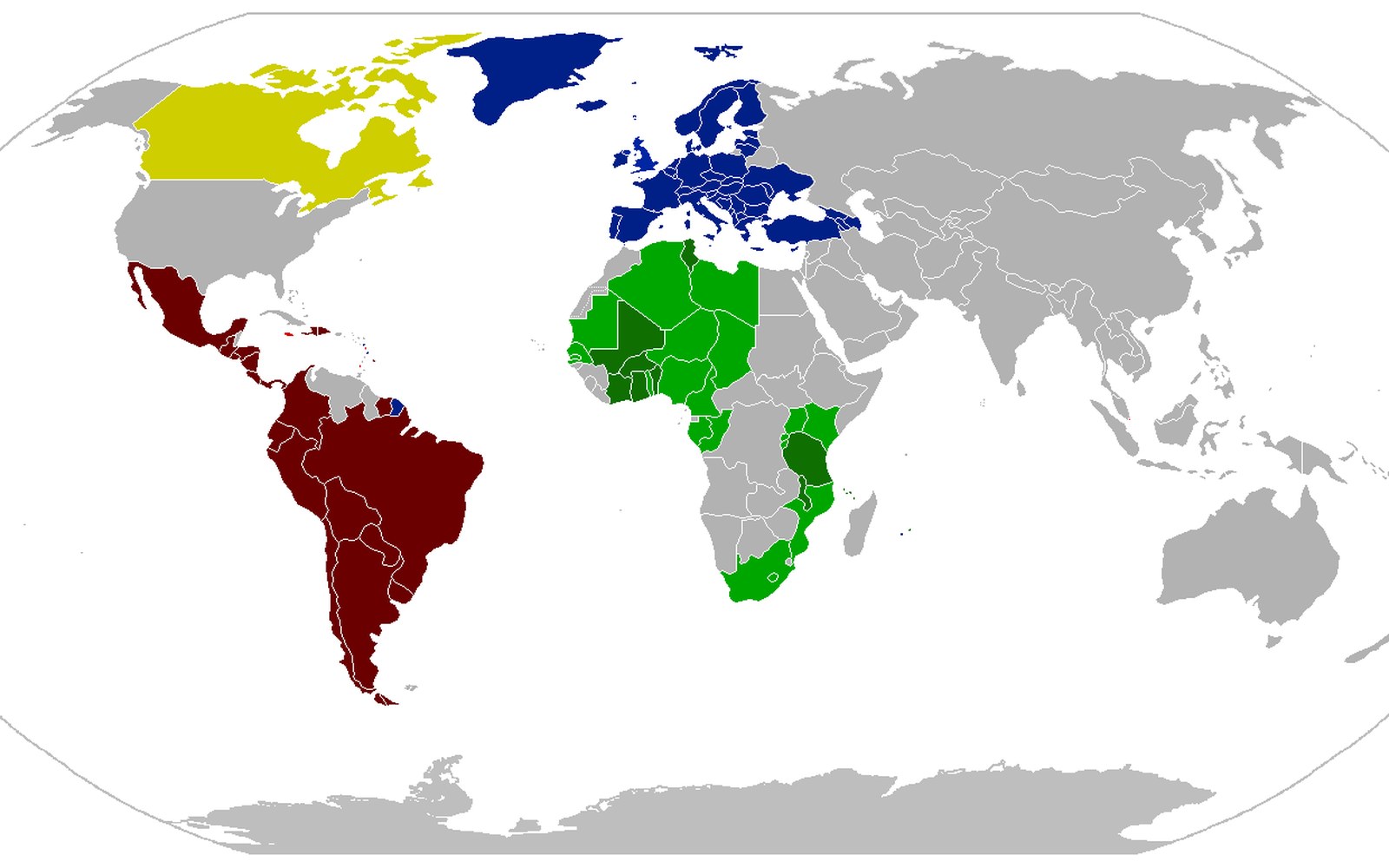
OC-24/17 applies only to states that are parties to the American Convention and have accepted the Court's advisory jurisdiction — a roster that excludes the United States and Canada, both of which are members of the Organization of American States but have not ratified the Convention. The opinion therefore operates as a regional instrument with no direct effect on the two largest common-law jurisdictions in the hemisphere. Its legal authority also remains contestable: several state parties publicly declined to treat it as obligatory, arguing that advisory opinions cannot override domestic constitutional arrangements. That tension between the Court's interpretive authority and state sovereignty remained unresolved in the Court's own jurisprudence as of the date of this writing.

Christopher Street, part of a National Monument since 24 June 2016.
Photo: Stonewall Inn with Orlando nightclub shooting memorial during Pride 2016 (50126p) · Wikimedia Commons