Obergefell v. Hodges, 576 U.S. 644 (2015): The Holding and the Four Dissents
The Fourteenth Amendment requires states both to license same-sex marriages and to recognise those lawfully performed elsewhere — a five-to-four ruling that settled, and divided, the Court.
The two-part holding
- Licensing mandatethe Fourteenth Amendment requires every state to issue marriage licences to same-sex couples
- Recognition mandatestates must recognise same-sex marriages validly performed in other jurisdictions
- Constitutional basisdue process clause and equal protection clause, read in tandem, not as independent grounds
The Holding
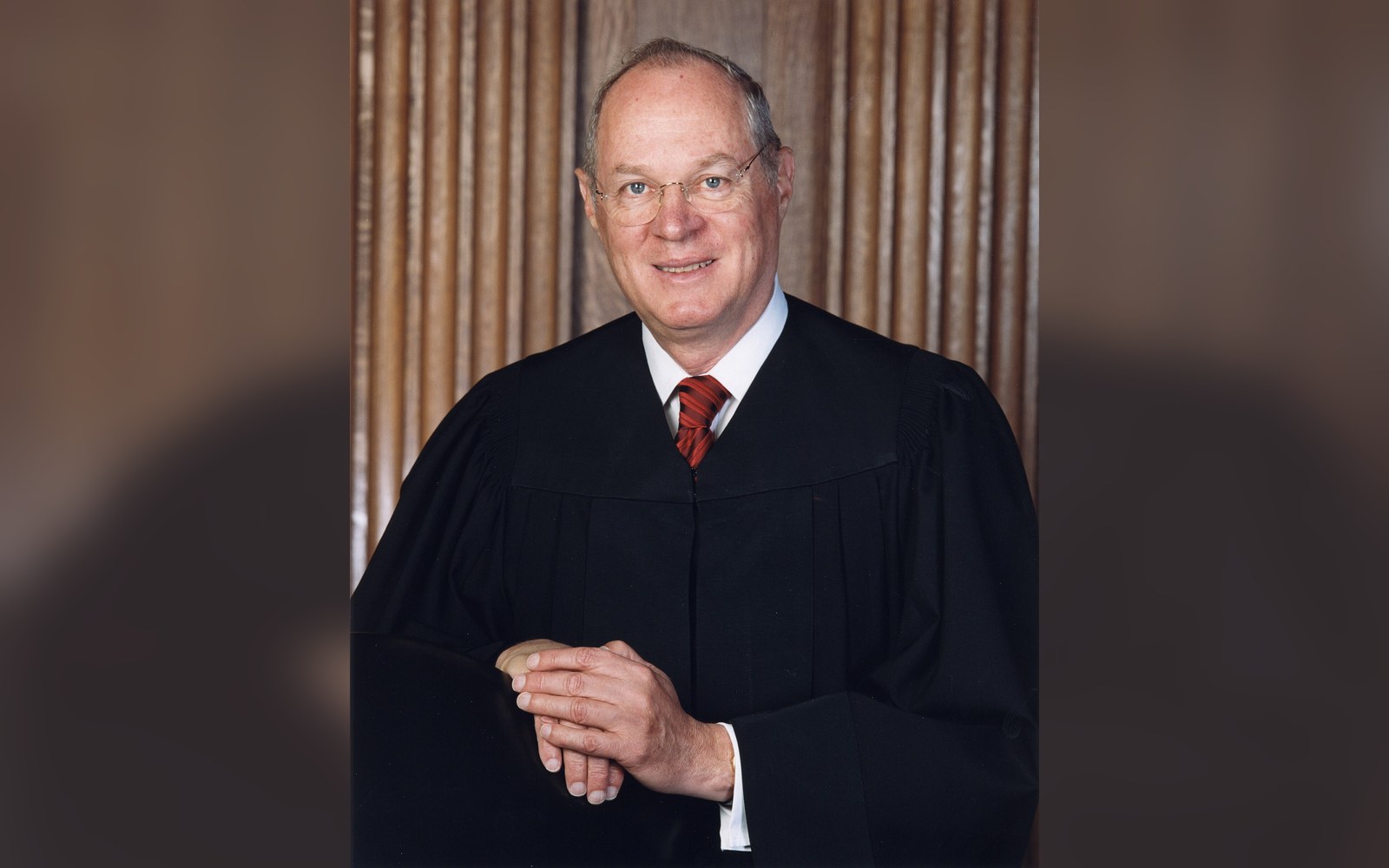
On 26 June 2015, the Supreme Court of the United States decided Obergefell v. Hodges, 576 U.S. 644, holding that the Fourteenth Amendment's due process clause and equal protection clause together require states to license marriages between two people of the same sex and to recognise such marriages when validly performed in another jurisdiction. Justice Anthony Kennedy wrote for the majority, joined by Justices Ginsburg, Breyer, Sotomayor and Kagan. Chief Justice John Roberts and Justices Antonin Scalia, Clarence Thomas and Samuel Alito each filed separate dissents.
The case consolidated several Sixth Circuit appeals arising from Kentucky, Michigan, Ohio and Tennessee. Jim Obergefell, the named petitioner, had married his partner John Arthur in Maryland; Ohio refused to list Obergefell as surviving spouse on Arthur's death certificate. The Sixth Circuit had reversed lower-court rulings in favour of the plaintiffs, creating a circuit split that the Court resolved by granting certiorari in January 2015.
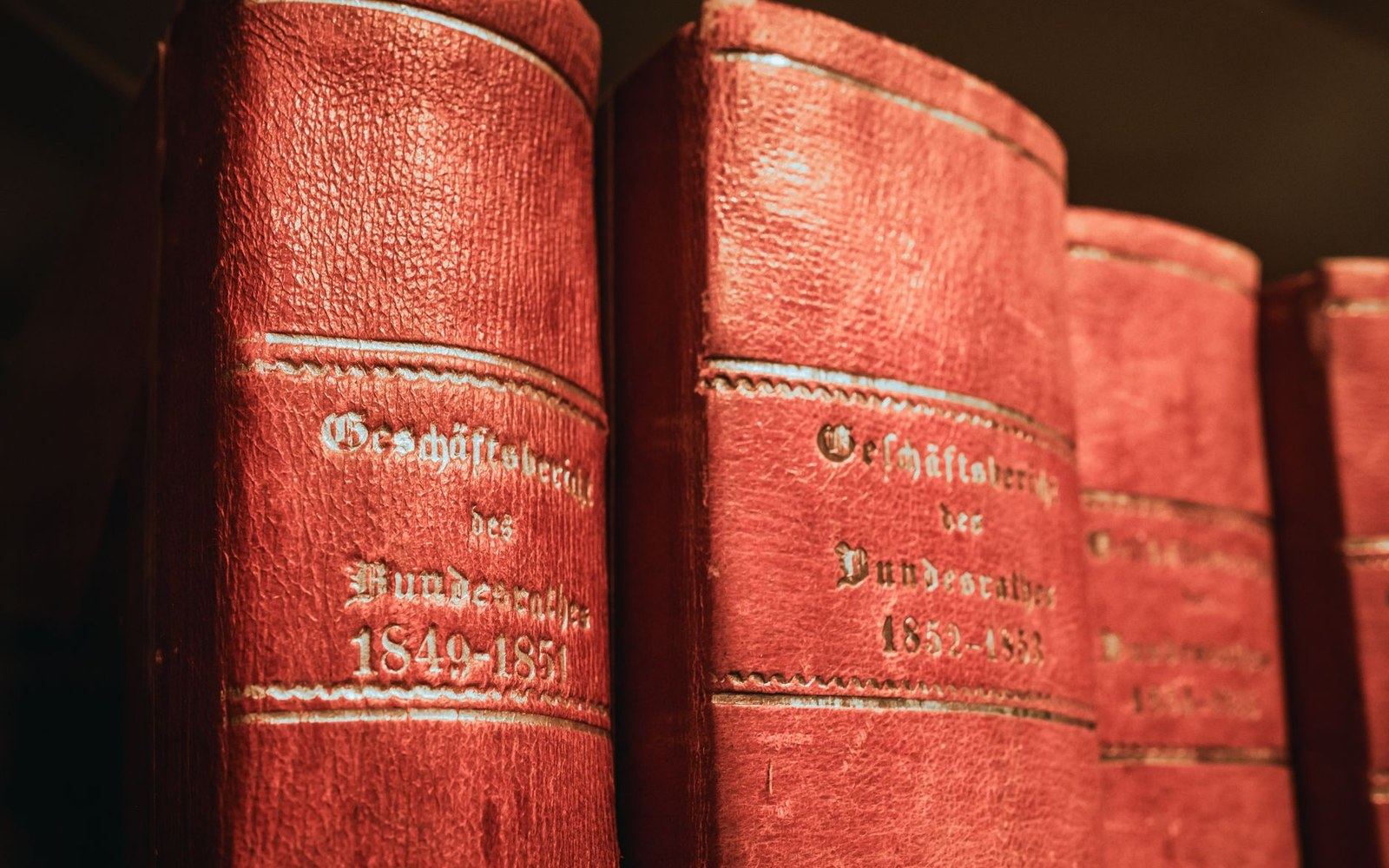
The bound volumes are the citation: a holding exists at a page number, and that page number is how every later court reaches it.
Photo: Christian Wasserfallen / PexelsKennedy's majority identified four principles animating the conclusion. First, personal choices central to individual dignity and autonomy — including the decision to marry — are protected by the due process clause. Second, the right to marry supports a two-person union unlike any other in its intimacy and permanence, an interest the Court had recognised in a line of cases from Loving v. Virginia (1967) onward. Third, marriage and the raising of children are interconnected, and denying marriage to same-sex couples harms children of those couples. Fourth, marriage is a keystone of social order; exclusion from it locks same-sex couples out of a constellation of benefits and responsibilities that the law ties to marital status. The majority held that these four principles, considered together, demonstrate that same-sex couples seek in marriage the same liberties the Court has long protected ↗, and that the equal protection clause reinforces what the due process clause compels. Neither clause was held to operate independently; the majority treated them as mutually confirming.
The decision overruled Baker v. Nelson, 409 U.S. 810 (1972), a summary dismissal that lower courts had sometimes cited as foreclosing the constitutional question. It extended the substantive due process analysis of United States v. Windsor (2013), which had struck down section 3 of the Defense of Marriage Act but had not addressed state-law exclusions. The operative holding is twofold: a licensing mandate directed at all fifty states and a recognition mandate covering out-of-state marriages.
The Four Dissents
Chief Justice Roberts filed the lead dissent, joined by Justices Scalia and Thomas. His central argument was institutional rather than substantive: the Constitution does not answer the question whether two people of the same sex may marry, and the majority erred in removing from democratic deliberation a question actively being resolved by legislatures and electorates. Roberts accepted that the petitioners' interests were dignified and real, but contended that the majority's due process reasoning closely tracked the discredited methodology of Lochner v. New York (1905) ↗, substituting judicial preference for constitutional text. He argued that the right to marry, properly defined, encompasses the traditional institution, and that expanding the definition required an amendment, not a ruling. Roberts also questioned the majority's equal protection reasoning, finding it underdeveloped, and warned that the decision would invite conflicts with religious liberty claims — a concern he left for future cases to address.
Justice Scalia's dissent, joined by Thomas, was the sharpest in register. He characterised the majority opinion as a "judicial Putsch" and objected that no democratic legitimacy attached to five lawyers overriding the considered judgments of voters across dozens of states. His critique was as much procedural as substantive: he faulted the majority's prose as grandiose and its methodology as untethered from the constitutional text. Scalia noted that the Fourteenth Amendment, ratified in 1868, was not understood by its framers or ratifiers to require any particular rule about marriage, and that the Court's substantive due process cases had never rested on so thin a historical foundation for so sweeping a right. He maintained that the holding robbed citizens of the ability to govern themselves on a genuinely contested social question.

Almost every case here reached the Court through one of a handful of litigating offices.
Photo: Erik Mclean / PexelsJustice Thomas's dissent, joined by Scalia, engaged most directly with the majority's due process analysis. Thomas argued that the liberty protected by the due process clause is negative — freedom from governmental restraint — not a positive entitlement to governmental recognition or benefits. On that reading, no state had deprived any petitioner of liberty; couples remained free to live together and to enter private commitments. The majority's conception of dignity, Thomas contended, was a category unknown to the Framers and one that courts are ill-equipped to define: governments cannot give dignity, and they cannot take it away. He further noted that the majority's reasoning threatened the Court's precedents grounding religious exemptions in positive constitutional liberty.
Justice Alito's dissent, joined by Scalia and Thomas, located the ruling's flaw in its treatment of the democratic process. He argued that defining marriage is a task the Constitution assigns to the people, not the judiciary, and that the Court was substituting its own understanding of marriage — as a commitment between two adults for mutual support and fulfilment — for a rival understanding rooted in procreation and child-rearing. Alito distinguished the question of policy (whether states should allow same-sex marriage, a question on which he expressed no view) from the question of constitutional authority (whether the Fourteenth Amendment requires it). He warned that the decision would be used to stigmatise those who hold traditional views, and would narrow the space within which civil society institutions could act on a different conception of marriage.
Effect
Obergefell took immediate effect. County clerks across states that had maintained same-sex marriage bans began issuing licences on 26 June 2015, and federal recognition followed automatically for all purposes to which marital status is material. The decision left standing the question of whether religious officiants or civil servants with religious objections could claim exemptions from participating — a set of conflicts the Court subsequently addressed in Masterpiece Cakeshop (2018) and 303 Creative (2023) without returning to the holding in Obergefell itself.
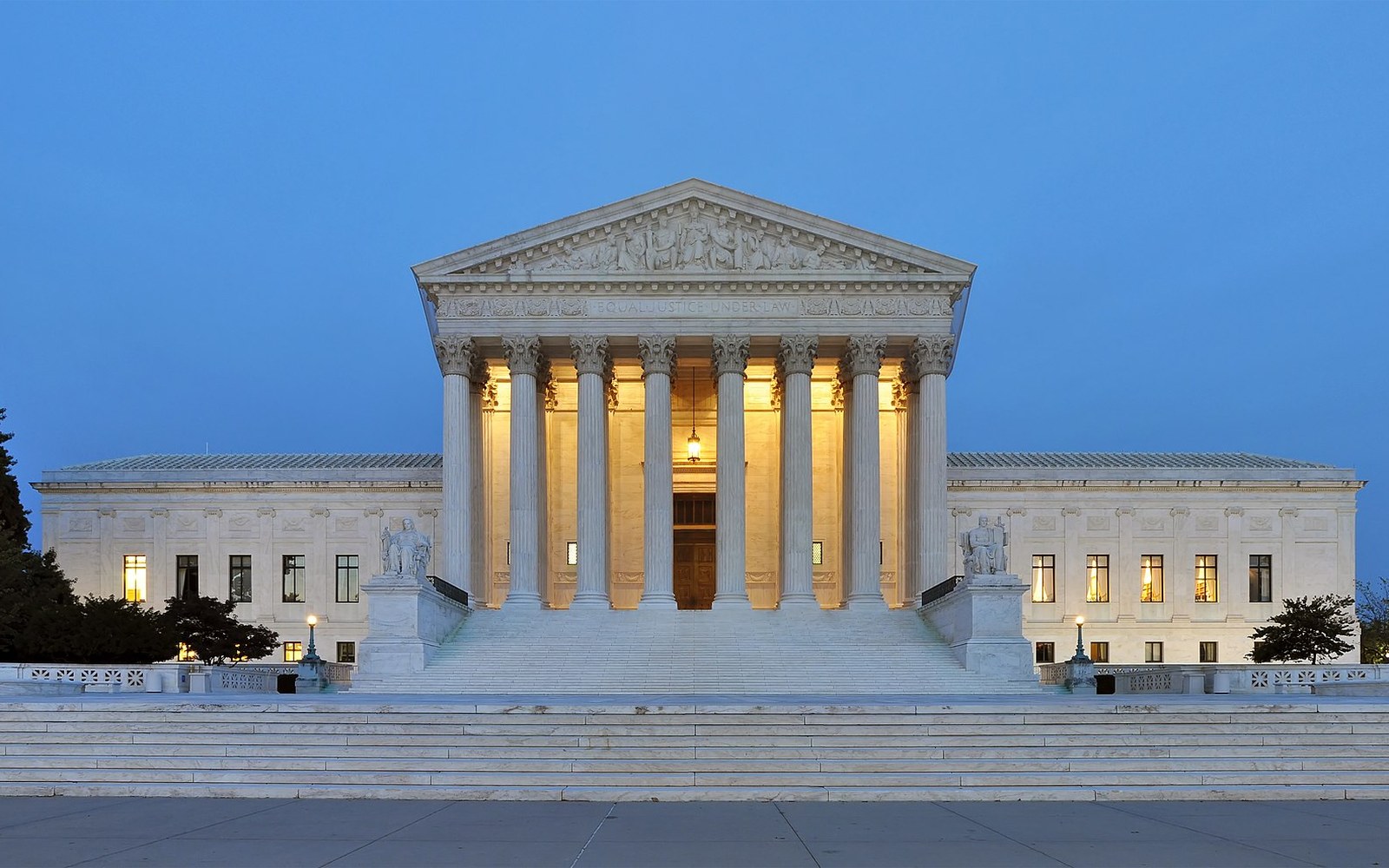
Nine votes, and the building they are counted in.
Photo: Panorama of United States Supreme Court Building at Dusk · Wikimedia Commons