H.R. 8404: Recognition Without Licensure
The Respect for Marriage Act, signed 13 December 2022, did three things: it repealed DOMA, mandated federal recognition of any marriage valid where performed, and expressly declined to require any state to issue a marriage licence.
Key votes and dates
- 28 July 2022House passed original H.R. 8404: 267–157
- 29 November 2022Senate passed amended bill: 61–36
- 8 December 2022House agreed to Senate amendments: 258–169
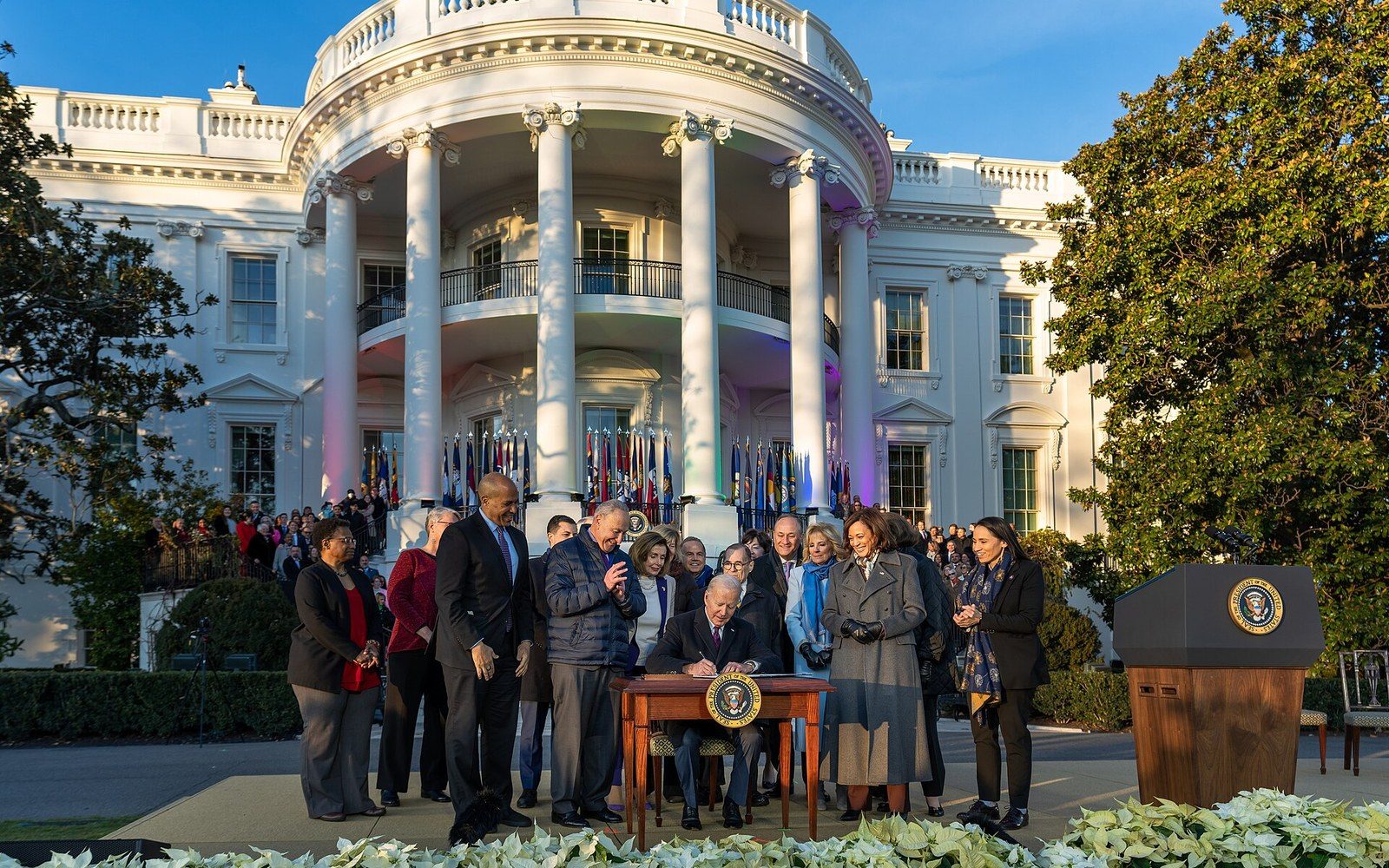
- 13 December 2022President Biden signed H.R. 8404 into law
What the Statute Says
Congress enacted H.R. 8404, the Respect for Marriage Act, on 8 December 2022; President Biden signed it five days later, on 13 December 2022. The law operates on two tracks simultaneously. The first is negative: it repeals the Defense of Marriage Act, striking from the United States Code the definition of marriage as between one man and one woman that had governed federal law since 21 September 1996. The second is affirmative: it instructs federal agencies and courts to recognise any marriage between two individuals if the marriage was valid in the state, territory, or foreign jurisdiction where it was solemnised.
The operative recognition language is blunt. The statute provides that no person acting under colour of state law may deny full faith and credit to any public act, record, or judicial proceeding of any other state concerning a marriage between two individuals, on the basis of the sex, race, ethnicity, or national origin of those individuals. That phrasing consciously copies the idiom of the Full Faith and Credit Clause. Congress also wrote a definition of "spouse" into the United States Code that extends to any individual lawfully married to another individual, replacing the male–female pair the original DOMA had inscribed.
The enrolled text as it went to signature, carrying both the repeal and the Senate amendment.
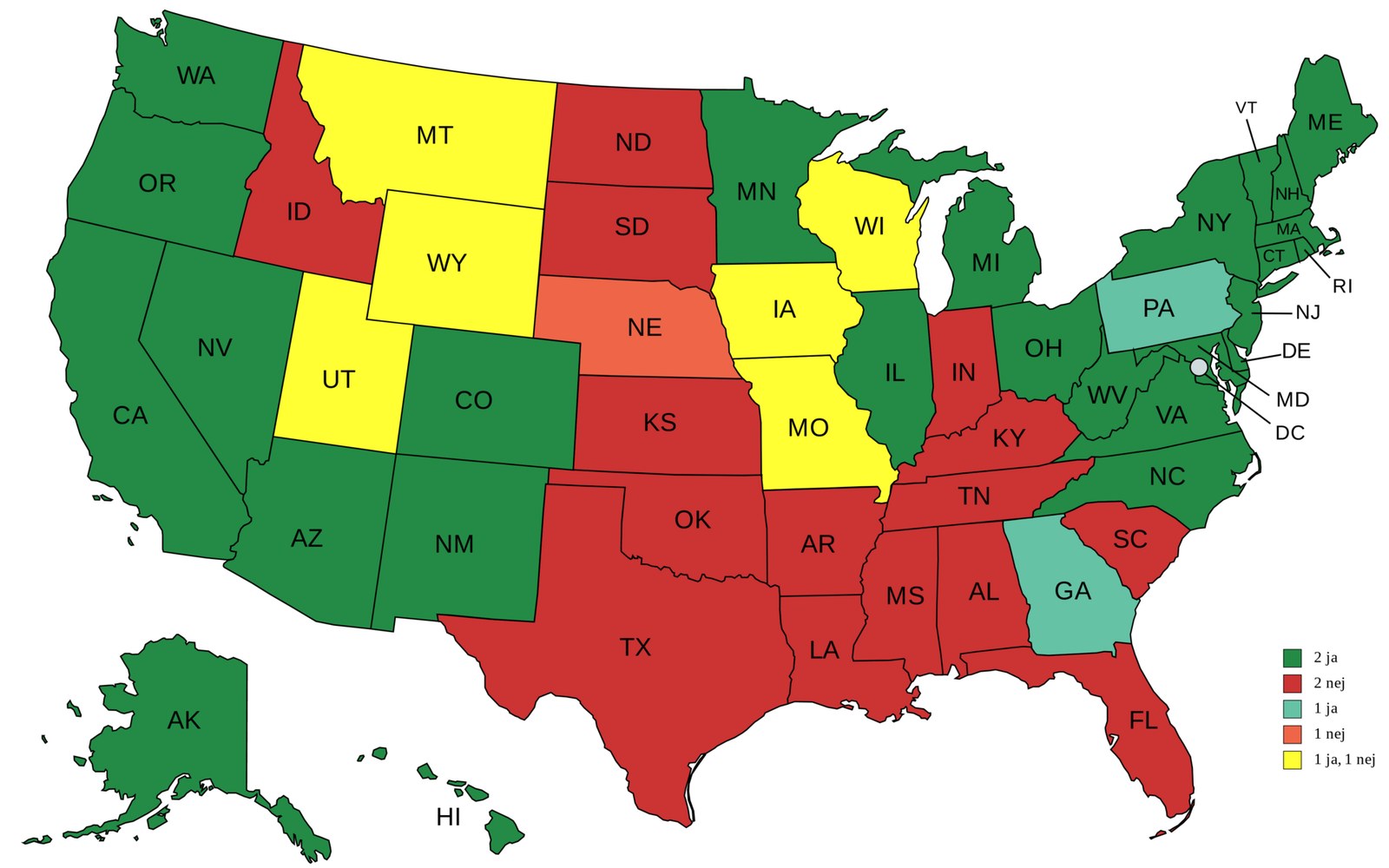
Photo: Respect for Marriage Act Senate Map · Wikimedia CommonsWhat the Act does not say is equally deliberate. Section 6 of H.R. 8404 contains a clause that no state is required to issue a marriage licence contrary to state law. The distinction matters constitutionally and practically: the statute mandates recognition of a marriage contracted elsewhere while leaving intact — at least on the text of the federal statute — whatever residual latitude states might claim over their own licensure authority. In practice, Obergefell v. Hodges, 576 U.S. 644 (2015), already requires every state to issue licences to same-sex couples; the savings clause speaks to the scenario in which Obergefell were one day overruled, and reflects the concessions Senate sponsors made to secure Republican votes rather than any current ambiguity.
Senate, House, and the Religious-Organisation Amendment
The Senate voted 61 to 36 on 29 November 2022 to pass an amended version of the bill that had already cleared the House in July. Twelve Republican senators voted with the Democratic caucus. That margin was not accidental: floor managers Tammy Baldwin of Wisconsin and Susan Collins of Maine had spent weeks negotiating an amendment specifically addressed to religious organisations and nonprofit entities, and the coalition of sixty-one held only after that amendment was attached.
The religious-organisation amendment, added before final Senate passage, states that nothing in the Act shall be construed to require any religious organisation or nonprofit entity to provide any goods, services, facilities, accommodations, advantages, privileges, licenses, or benefits related to the solemnisation or celebration of a marriage. It further provides that no adverse action may be taken against such an organisation by the federal government on the basis of the organisation's beliefs or conduct regarding marriage. Supporters argued the clause merely codified what the First Amendment already protects; opponents of the bill argued no additional carve-out was necessary; the amendment's practical effect is to make explicit that a religious entity's refusal to host or assist a same-sex wedding ceremony does not, by reason of this statute alone, trigger federal sanction.
After the Senate amendment, the bill returned to the House for a final vote on 8 December 2022. The House agreed to the Senate-amended text 258 to 169 ↗, with 39 Republicans joining all voting Democrats. The margin was narrower than the 267 to 157 vote in July on the unamended House-passed version, but the December total reflected the conference calendar — several members who had voted in July did not cast votes in December — rather than any erosion of support.

The bound volumes are the citation: a holding exists at a page number, and that page number is how every later court reaches it.
Photo: Christian Wasserfallen / PexelsFederal Recognition and the DOMA Gap
DOMA's section 3 had prevented the federal government from recognising any same-sex marriage even after a state issued a valid licence. United States v. Windsor, 570 U.S. 744 (2013), struck section 3 on Fifth Amendment grounds, and federal agencies had been applying Windsor's holding for nearly a decade before the Respect for Marriage Act passed. The Act's repeal of DOMA is therefore largely consolidating: it removes text that the Supreme Court had already rendered unenforceable rather than creating a new right. Its significance lies not in the immediate operational change but in the statutory baseline it establishes. A future Congress that wanted to restore DOMA would now need to affirmatively legislate its way back rather than merely revive language already on the books; and a future administration seeking to deny federal benefits to married same-sex couples would face a statutory barrier rather than a policy vacuum.
The full-faith-and-credit provision does carry independent weight. DOMA's section 2, which permitted states to refuse recognition of another state's same-sex marriages, was never struck down by the Supreme Court; it was simply overtaken by Obergefell. The Respect for Marriage Act repeals that provision directly and substitutes a recognition mandate, so its interplay with any reconsideration of Obergefell becomes a live question. If Obergefell were overruled and a state attempted to refuse recognition of a same-sex marriage lawfully performed elsewhere, the Respect for Marriage Act's full-faith-and-credit command would present an independent federal statutory obstacle — separate from and in addition to whatever constitutional arguments might remain.
Placement in the Federal Statutory Sequence
The Act amends Chapter 1 of Title 1 of the United States Code, which is where the DOMA definitions had sat since 1996, and inserts a new Chapter 2A. The codified text now reads as a freestanding recognition statute ↗ rather than a definitional rider — a structural choice that signals Congress treated this as a substantive civil-rights enactment rather than a cleanup measure. The Williams Institute estimated in 2022 that approximately 568,000 same-sex couples were married in the United States, all of whose federal legal status is now grounded in affirmative statutory text rather than solely in constitutional case law whose continuation no longer carries the certainty it once did.

Sixty-one votes.
Photo: Former Senate Chamber, Alabama State Capitol, as Seen From Gallery 20160713 1 · Wikimedia Commons