303 Creative LLC v. Elenis, 600 U.S. 570 (2023): The First Amendment Question Masterpiece Avoided
Where Masterpiece Cakeshop left the constitutional question open, 303 Creative answered it — on free-speech grounds, and on a largely hypothetical record.
Key facts
- Decision date30 June 2023
- Vote6–3, majority authored by Justice Gorsuch
- BasisFirst Amendment compelled-speech, not Free Exercise
- RespondentAubrey Elenis, director of the Colorado Civil Rights Division
- Law at issueColorado's Anti-Discrimination Act (CADA)
- Pre-enforcement challengeno customer had been refused at the time of suit
The Holding
On 30 June 2023, the Supreme Court held six to three that the First Amendment bars Colorado from requiring Lorie Smith, a web designer operating as 303 Creative LLC, to create wedding websites for same-sex couples. Justice Neil Gorsuch wrote for the majority. The ruling rested entirely on compelled speech, not religious belief: Colorado's public accommodation law, the Court held, would force Smith to produce expressive content she did not wish to create, and the government may not conscript a private speaker into conveying a message she rejects.
The posture of the case was unusual. The parties stipulated that Smith had not yet refused any same-sex couple's request; the challenge was pre-enforcement. The majority treated the stipulated record as sufficient to establish the constitutional question. Critics noted that one stipulated request appeared to have been submitted by a man who denied making it and who was, in fact, married to a woman — a factual irregularity the majority did not address.
Almost every case here reached the Court through one of a handful of litigating offices.
Photo: Erik Mclean / PexelsThe Dissent
Justice Sonia Sotomayor, joined by Justices Elena Kagan and Ketanji Brown Jackson, dissented in terms the majority called overwrought. Sotomayor argued that the decision created, for the first time, a constitutional right to refuse service to a protected class ↗ on expressive grounds — a principle she read as incompatible with a century of public-accommodation law. The First Amendment, she wrote, had never before been held to license a business open to the general public to turn away customers based on who they are.
The majority responded that it addressed only "pure speech," not conduct, and that its holding was narrow to expressive businesses. Whether that line holds in subsequent litigation remains an open question in the lower courts ↗.
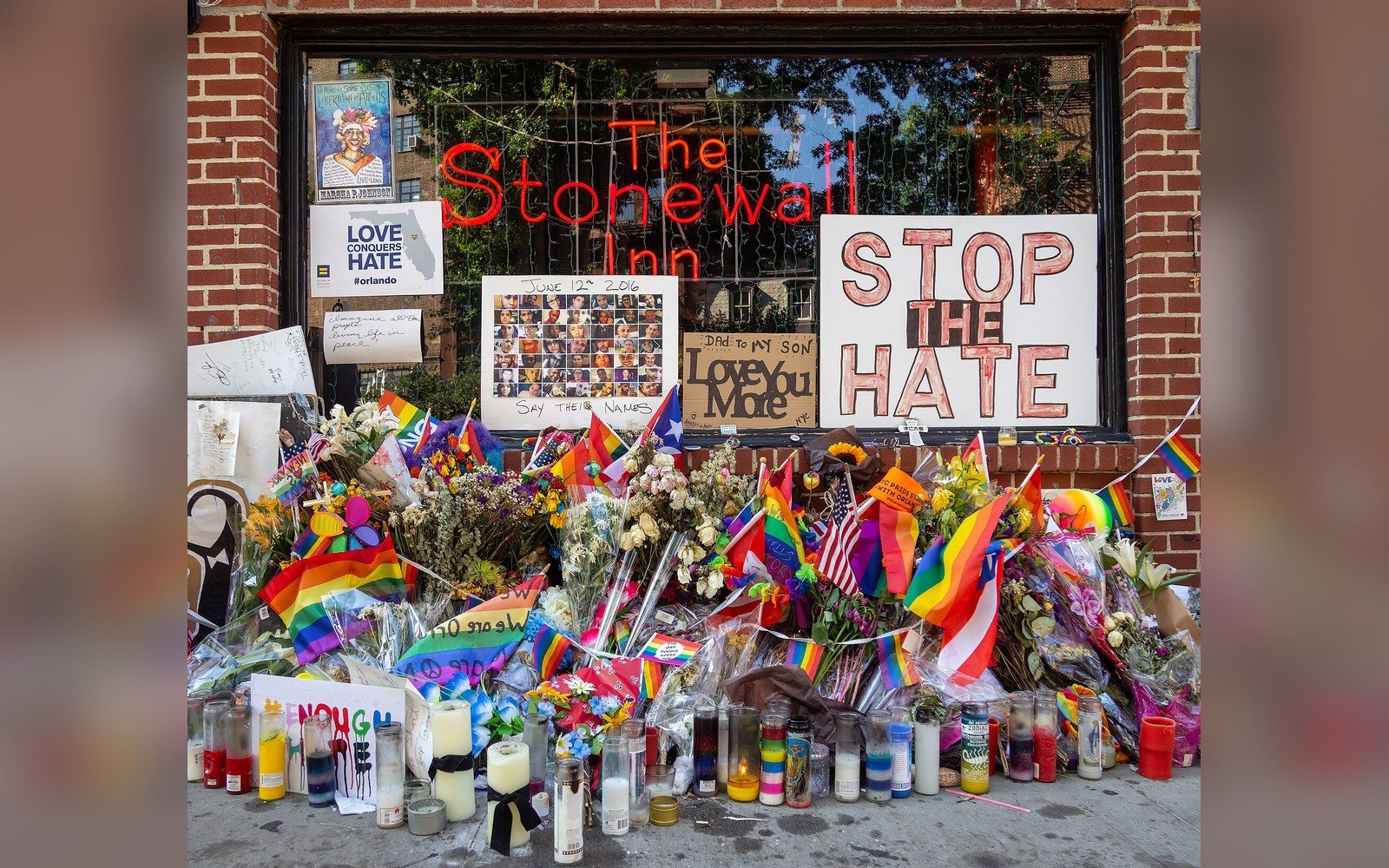
Christopher Street, part of a National Monument since 24 June 2016.
Photo: Stonewall Inn with Orlando nightclub shooting memorial during Pride 2016 (50126p) · Wikimedia Commons