Romer v. Evans, 517 U.S. 620 (1996): Colorado's Amendment 2 and the Rational Basis Test
The Supreme Court struck Colorado's Amendment 2 six to three, holding that a state may not single out one class of citizens for categorical exclusion from legal protection.
Key facts
- Amendment 2 approvedNovember 1992, Colorado referendum
- Decision date20 May 1996
- Vote6–3 to strike Amendment 2
- Majority authorJustice Anthony Kennedy
- Standard of review appliedrational basis (Fourteenth Amendment equal protection)
- DissentJustice Scalia, joined by Rehnquist and Thomas
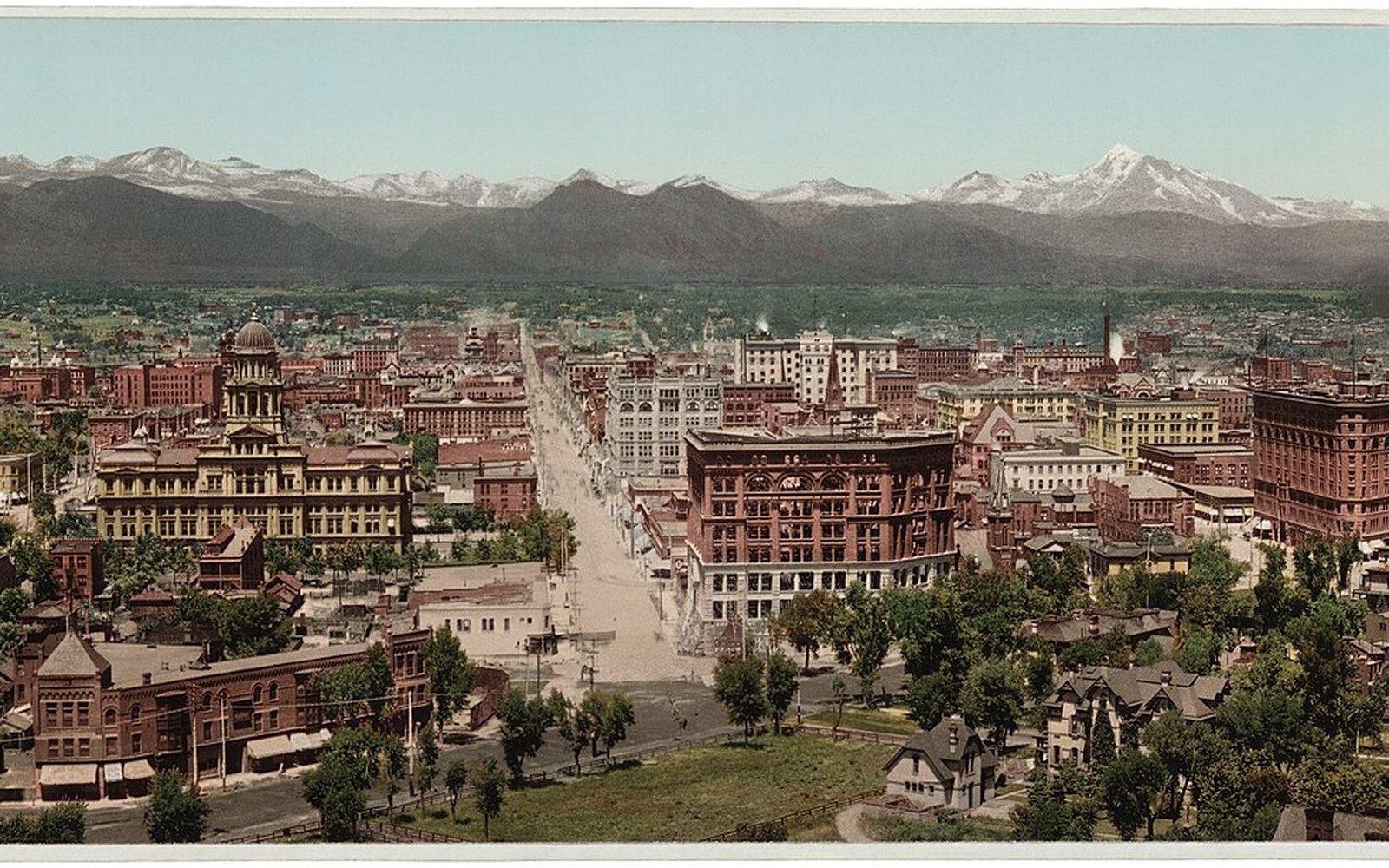
The Amendment and the Holding
Colorado voters approved Amendment 2 in November 1992. The provision, added to the state constitution by referendum, prohibited all legislative, executive, and judicial action — at any level of state or local government — designed to protect the status of persons based on "homosexual, lesbian or bisexual orientation, conduct, practices or relationships." Several Colorado municipalities had enacted anti-discrimination ordinances covering sexual orientation; Amendment 2 nullified them wholesale ↗.
The Supreme Court struck the amendment on 20 May 1996 by a vote of six to three. Writing for the majority, Justice Anthony Kennedy applied rational basis review — the least demanding standard of constitutional scrutiny — and found the amendment wanting even at that floor. The majority held that a law imposing a broad and undifferentiated disability on a single named group, without any plausible connection to a legitimate government interest, violated the equal protection clause of the Fourteenth Amendment. Kennedy's opinion characterised Amendment 2 as "a status-based enactment divorced from any factual context from which we could discern a relationship to legitimate state interests."
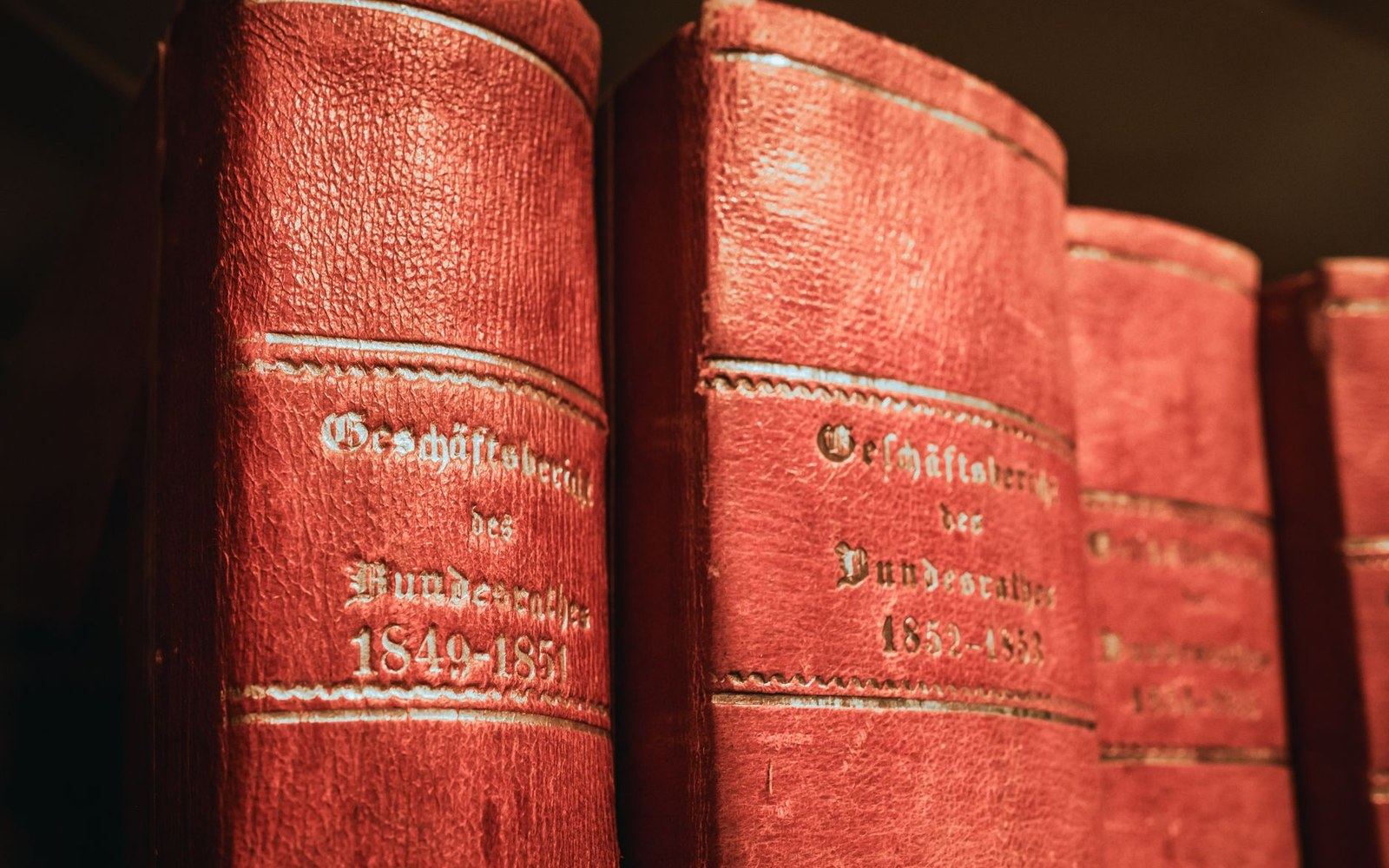
The bound volumes are the citation: a holding exists at a page number, and that page number is how every later court reaches it.
Photo: Christian Wasserfallen / PexelsScalia's Dissent
Justice Antonin Scalia, joined by Chief Justice William Rehnquist and Justice Clarence Thomas, dissented sharply. Scalia argued that the majority had invented a constitutional prohibition unknown to American legal tradition, that Colorado was doing no more than declining to give special protection to a particular form of conduct, and that the Court had improperly taken sides in a culture-war dispute properly left to democratic resolution. He drew a parallel to laws criminalising homosexual conduct — then still valid under Bowers v. Hardwick (1986) ↗ — to argue that the majority's reasoning was logically irreconcilable with that precedent.
Romer stopped short of identifying sexual orientation as a suspect classification or applying heightened scrutiny, a caution that left the doctrinal foundation deliberately narrow. The decision nonetheless marked the first time the Court had applied any constitutional protection to gay and lesbian citizens as a class, and its reasoning — that animus alone cannot supply a rational basis — carried forward into United States v. Windsor (2013) and beyond.
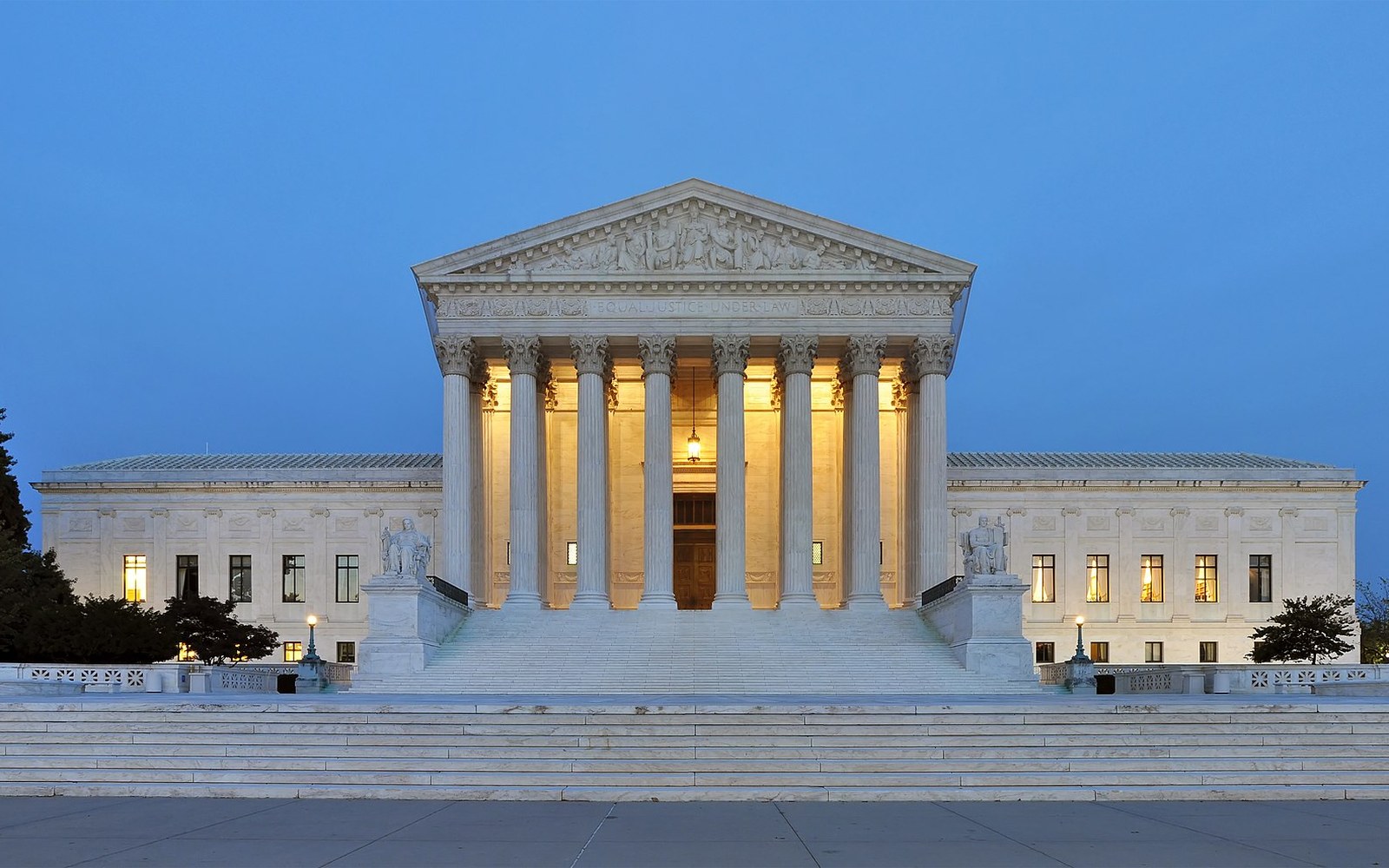
Nine votes, and the building they are counted in.
Photo: Panorama of United States Supreme Court Building at Dusk · Wikimedia Commons